
When a clip of professional cyclist Victor Campenaerts relieving himself into a bottle during the Tour de France circulated recently, it demonstrated the aesthetic that documentary audiences now expect: unplanned, unflattering, and undeniably human. Within hours, producers likely attempted to license this moment for projects examining athletic culture or endurance sports, only to encounter the structural impossibility of clearing truly viral content. Uncertain provenance, absent model releases, and ambiguous rights chains create errors and omissions (E&O) exposures that make distributors hesitate.
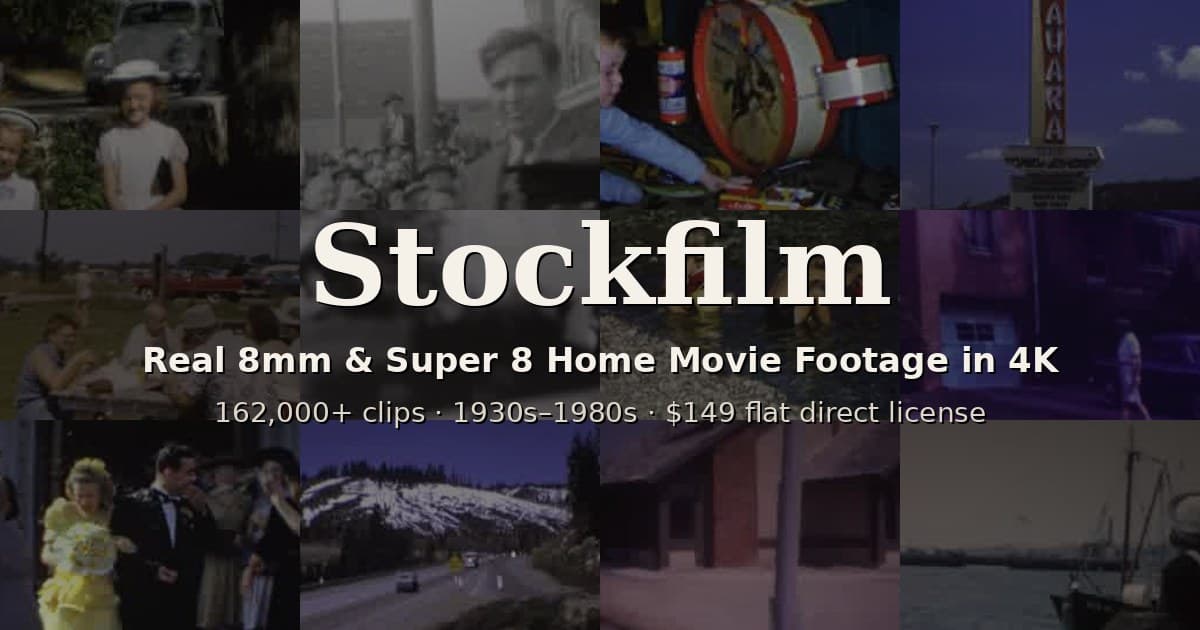
This friction defines the licensability gap—a market failure where aesthetic demand for vernacular authenticity outpaces the legal infrastructure required to deploy it safely. Production teams are increasingly resolving this paradox not by abandoning the found-footage aesthetic, but by sourcing chemically-verified vernacular 8mm and Super 8 archives that deliver equivalent visual texture with forensic-grade provenance documentation.
The Attribution Crisis in Digital-Native Content
The gravitational pull toward viral "found" material reflects audience sophistication. Viewers conditioned by social media detect the clinical uniformity of modern B-roll and distrust imagery that feels algorithmically polished. Yet genuinely crowdsourced footage presents specific forensic vulnerabilities that professional workflows cannot absorb:
- Provenance Fragmentation: Viral clips typically circulate through multiple platforms and recompression cycles, severing connections to original capture devices, operators, or institutional contexts. Without camera-original masters or transfer logs, establishing historical accuracy becomes impossible.
- Rights Bifurcation: The individual who uploads content to social platforms rarely holds exclusive intellectual property rights, particularly when footage captures third parties in private or compromising contexts. Model releases for identifiable individuals are virtually nonexistent in crowdsourced material.
- Metadata Decay: Each platform migration strips technical metadata—timecode, GPS coordinates, device signatures—that establishes temporal and spatial authenticity. By the time footage reaches documentary researchers, it exists as context-free digital objects vulnerable to misattribution.
- Synthetic Contamination Risk: As generative models improve at simulating handheld camera shake and compression artifacts, the provenance of digital-native "found" footage becomes forensically suspect. Without physical media verification, teams cannot guarantee that a viral clip is not a sophisticated synthetic generation designed to propagate misinformation.
For productions working with major distributors, these vulnerabilities translate into delivery delays, insurance voids, and post-release takedown risks. The aesthetic value of viral authenticity is negated by its structural untenability within professional legal frameworks.
Material Forensics and the Analog Gap
The solution lies in vernacular footage from the analog gap era—roughly 1980 to 2005—when consumer-grade film stock remained economically accessible but digital capture had not yet standardized image formats. This period generated millions of feet of 8mm and Super 8 footage capturing unguarded domestic, military, and civic moments with the specific awkwardness that AI generation struggles to replicate.
Unlike digital files, chemically-processed film carries inherent authentication markers. Professional archives verify these materials through:
- Emulsion Analysis: Chemical fading patterns and oxidation levels indicate storage conditions and temporal origin, creating material fingerprints that cannot be digitally synthesized without prohibitively expensive analog simulation.
- Grain Structure Authentication: Silver halide crystal formations vary by manufacturer and production year (Kodachrome versus Ektachrome versus reversal stocks), providing compositional evidence of capture date that survives digitization.
- Physical Gate Weave: The mechanical instability of consumer-grade 8mm cameras produces specific registration errors and frame-line fluctuations that differ measurably from digital filters designed to mimic analog texture.
- Chemical Dating Markers: Preservatives and dye couplers used in specific decades degrade in predictable patterns, allowing laboratories to verify temporal claims through chromatographic analysis of film samples.
These forensic characteristics serve as authentication infrastructure. For documentaries addressing infrastructure development, military history, or urban transformation—genres where accuracy disputes generate legal liability—material verification protects against both archival misrepresentation and AI-generated contamination.
Integrating Vernacular Archives into Pre-Production
Forward-thinking production teams are restructuring acquisition workflows to treat vernacular archives as raw material reserves rather than post-production afterthoughts. This shift requires reconceptualizing the research phase.
Instead of searching for specific shots during the edit—a high-risk strategy that forces clearance compromises under deadline pressure—producers are pre-licensing curated vernacular collections during development. This "authenticity reserve" approach mirrors the smart-bin workflows used in commercial production, where legal clearance precedes creative selection.
When sourcing, teams should evaluate archival partners on three criteria: chemical preservation protocols (cold storage, humidity controls), chain-of-custody documentation (estate provenance, military deaccession records), and transfer fidelity (4K scanning from camera-original elements rather than second-generation prints). Reputable archives provide material analysis reports that satisfy distributor due diligence requirements without requiring additional forensic investigation by production staff.
For hybrid projects combining archival footage with CGI reconstruction—such as military base visualizations or historical urban planning sequences—editors report that vernacular 8mm provides essential visual grounding. Its material flaws (light leaks, unstable exposure, handheld shake) create texture economies that signal "authenticity" to viewers through contrast with polished graphics, allowing intuitive differentiation between documented reality and reconstructed elements.
Frequently Asked Questions
What distinguishes vernacular archival footage from commercial stock media?
Vernacular footage refers to non-professional, community-captured film made by amateur operators rather than cinematographers. While commercial stock prioritizes generic usability and technical perfection, vernacular material features idiosyncratic framing, exposure errors, and unguarded moments that signal authenticity to contemporary audiences. Professionally archived vernacular collections provide the specific aesthetic texture of found footage combined with estate clearances and chain-of-custody documentation required for E&O insurance and distributor delivery.
How does analog film verification protect against AI-generated synthetic media?
Chemically-verified 8mm footage possesses physical characteristics—grain structures, emulsion degradation patterns, and mechanical gate registration errors—that serve as material evidence of temporal origin. These analog artifacts require physical film stock and specific chemical processing; simulating them digitally at forensic scale remains computationally prohibitive. When accompanied by documentation of chemical composition and storage history, this footage provides evidentiary standards that digital files cannot match, protecting productions against both synthetic fakes and archival misattribution.
What legal risks persist when using vernacular footage featuring identifiable individuals?
While professionally archived vernacular footage typically includes estate clearances or derives from contexts with diminished privacy expectations (public events, military documentation, street photography), productions must still evaluate fair use applicability or secure additional clearances based on jurisdiction and usage context. Unlike viral digital clips, archived vernacular materials come with historical provenance that allows legal teams to assess risk accurately—identifying whether footage originated in public or private spheres, or whether subjects had reasonable expectations of privacy during capture.
Conclusion
The licensability gap between viral aesthetic demand and legal clearance capacity will continue widening as generative AI complicates digital provenance and distributors tighten forensic requirements. Documentary teams that treat vernacular 8mm archives as strategic production infrastructure—sourcing chemically-verified materials during pre-production rather than scrambling for clearance during post—secure the unvarnished human texture that drives audience engagement while maintaining the documentary evidence standards that keep projects insured, delivered, and legally defensible.