
About Stockfilm
About Stockfilm
Stockfilm is an archival footage company that scans, restores and licenses real 8mm and Super 8 home movies from the 1930s to the 1980s for documentary producers, agencies, broadcasters, museums and AI research teams.
The archive holds 162,000+ searchable clips cut from 1,600+ physical reels shot in 121 countries. It has been run by its founder from Colorado since 2015, and it is free to search.
What Stockfilm Does
Direct licensing of restored 4K masters
More than 115,000+ clips can be licensed on stockfilm.com at a flat $149 each, under a royalty-free, worldwide, perpetual license. Payment clears, the restored master downloads, and a receipt is emailed, so an editor can have the clip on a timeline within minutes of finding it.
The full catalog on Pond5 and Shutterstock
The complete 162,000+ clip catalog is also listed on Pond5, and a selection on Shutterstock, for teams that already buy through those marketplaces. Prices there run $79 to $299 per clip and the license is the marketplace's own.
Human-reviewed footage research
Send a production brief with the story, date range, geography and required scenes, and the archive team searches the full catalog by hand, including material that keyword search surfaces poorly. Candidates come back by email within 1 to 3 business days, with source information where it exists.
Research boards and rough cuts
Producers can save selects and alternates to a private board, share a read-only review link with a director or counsel, and export the list. The footage brief tool and Rough Cut Builder assemble a watermarked candidate sequence from a plain-language description, so a team can react to a cut before licensing anything.
Datasets for AI and machine learning research
Production licenses exclude machine learning. Research groups and AI teams license footage and frames under a separate dataset agreement, with evaluation-only terms available for testing models on real film damage, period color and dated scenes. The archive publishes a datasheet describing the collection.
Free public research and tools
The Visual Memory Index publishes what people search for in a home-movie archive against what survives. Free tools include a decade and film-damage clip analyzer, timecode and aspect-ratio calculators, and grain overlays. All of it is free to use without an account.
What Makes Stockfilm Different
1,600+ physical reels, owned outright
Every clip was scanned in-house from a standard 8mm or Super 8 reel that Stockfilm owns and stores, 1,600+ reels in all. Getty Images and Shutterstock aggregate partner collections they do not hold, and Footage.net is a search engine across other people's archives. The specific reel is shown on a clip page only where the catalog can match the clip to a reel record by year and place; that match is labelled a candidate match, not a digitization log, and about 46% of searchable clips currently carry one.
One price, $149, shown before you click
A direct license is a flat $149 for the restored master, worldwide and perpetual, with no subscription, minimum or quote cycle. Getty Images publishes no per-clip video prices and licenses editorial footage through quotes and enterprise contracts. Historic Films charges a $100 research fee and a $500 license minimum. CriticalPast is the closest comparison at $95 to $295 per clip, but for government and newsreel film in HD only.
Home movies, not newsreels
Stockfilm holds one kind of footage: candid, privately filmed everyday life from the 1930s to the 1980s. Christmas mornings, road trips, storefronts, backyards and weddings that no news crew recorded. CriticalPast and AP Archive are built on professional and government film; Prelinger's free collection is mostly advertising and industrial film in standard definition. For the texture between the archival set pieces, this is the specialist source.
Restored 4K masters, and nothing invented
Reels are scanned frame by frame at 3840 by 2160 and restored conservatively: dust, scratches, flicker and color shift are corrected, and no frame is AI-generated, extended, interpolated or synthetically upscaled. CriticalPast delivers 1080p masters; Prelinger's legacy digitizations are roughly 480 lines. Every clip page says what resolution it carries, because not every reel scans to usable 4K.
Published provenance standards and honest metadata labels
Stockfilm publishes how it sources film, documents provenance and labels the confidence of every date and place, and it marks estimates as estimates rather than presenting them as fact. Most marketplaces show a title and keywords with no account of how they were made. Archival producers can read the full standard on the archive integrity page and request source information for any clip.
Built to still be here in a hundred years
The catalog is free to search, clip pages keep their URLs, and the physical reels stay preserved after scanning. The archive has run continuously since 2015 under one owner. That matters when a documentary cites a clip page in its credits, or a teacher bookmarks a 1953 main street for a class ten years from now.
The full 13-source, fact-checked comparison, including where other archives beat us, is on the comparison page.
Who Uses Stockfilm
- Archival producers and researchers on feature and series documentaries, including Archival Producers Alliance members, who need dated, placed, unposed footage with a paper trail.
- Editors and producers at brand agencies and production companies making heritage campaigns, anniversary films and nostalgia-led advertising.
- Broadcast and streaming news and factual teams that need 1930s to 1980s domestic and street footage on a deadline.
- Museums, historical societies and exhibition designers building period installations and educational media.
- Machine learning research groups and AI teams evaluating restoration, dating, colorization and provenance models on real, non-synthetic film.
- Independent filmmakers, YouTube and social creators, and educators who want authentic period footage at a fixed price without a subscription.
The Team Behind Stockfilm
Phil Maher, founder
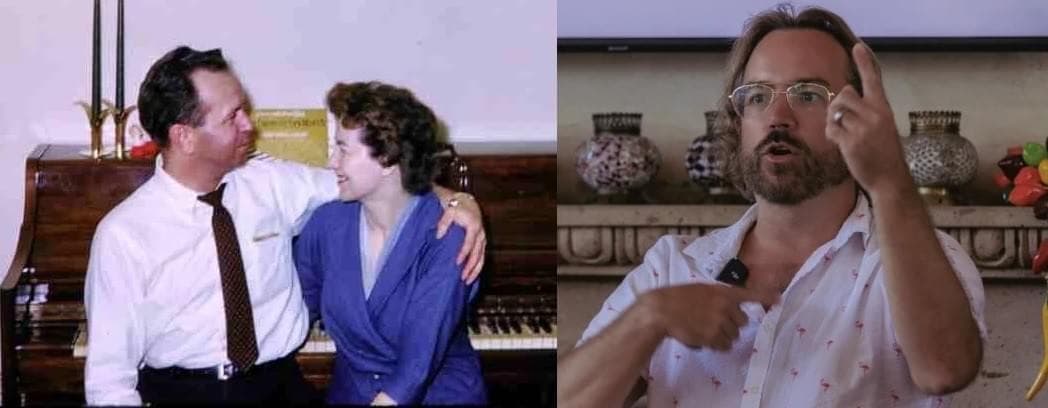
Phil Maher started Stockfilm in 2015 after finding the reels his grandfather had filmed decades earlier around Chicago, on road trips and at family milestones. He has run the archive since, from sourcing and scanning reels to licensing and the archive's research work, and he represents Stockfilm in FOCAL International. Connect on LinkedIn.
How the company started
The first reels were fragile, irreplaceable and full of moments that could easily have been lost, so the first job was to scan and restore them properly. Putting that footage in front of people who needed real film instead of a recreation turned a family project into an archive that buys, preserves and licenses home movies from across the United States and beyond.
The team today
Stockfilm is a small, founder-led team covering reel sourcing and inspection, scanning and restoration, cataloging, licensing support and software. Most of the work in search, restoration tooling and the research publications is built in-house. Open roles are listed on the careers page.
How Stockfilm Works
Search and preview for free
Search by keyword, decade, year, country and city, filter to directly licensable clips, and watch hover previews. No account is needed to search or to build a board.
License direct in minutes, or through Pond5
Choose the usage scope at checkout (commercial and broadcast for clips marked Commercial; editorial, internal or social for every direct clip), pay by card or crypto, and download the restored master immediately with an emailed receipt. Clips not yet available direct can be licensed on Pond5.
Send a brief when search is not enough
Use the request footage form with story context, date range, geography, required scenes, exclusions and deadline. A person on the archive team runs the pull and replies by email within 1 to 3 business days.
Who you deal with
Stockfilm is a small team, and licensing, research and rights questions are answered by the people who run the archive, not a ticket queue. Email phil@stockfilm.com for licensing, billing, download and order questions; include the clip ID and receipt for order questions.
Rights and clearance support
Each clip page shows content flags (people, minors, logos, artwork, music) where review has recorded them, plus a rights and clearance panel. A metadata correction form lets researchers and families report an error or supply information about a clip.
No onboarding, no contracts
There is nothing to set up. Teams that license regularly can use boards for shared review, and Archival Producers Alliance members get a 20 percent enhanced member benefit on direct licenses. Enterprise dataset and AI licensing is agreed by written contract.
Key Facts
| Company name | Stockfilm (stockfilm.com) |
|---|---|
| Type | Privately owned archival footage company and physical film archive |
| Founded | 2015 |
| Founder | Phil Maher |
| Headquarters | 2823 Callan Ct, Broomfield, Colorado 80023, USA |
| Website | stockfilm.com |
| Core offering | Licensing of restored 8mm and Super 8 home-movie footage, 1930s to 1980s: 162,000+ searchable clips from 1,600+ physical reels across 121 countries |
| Pricing | Direct: flat $149 per clip for the restored master. Pond5: $79 to $299 per clip, set by the marketplace. Dataset and AI licensing: by agreement. |
| Contract terms | Royalty-free, worldwide, perpetual, non-exclusive license per clip. No subscription, minimum order or long-term contract. Production licenses exclude AI training; dataset licenses are separate written agreements. |
| Services | Direct licensing, marketplace distribution (Pond5, Shutterstock), human-reviewed footage research, research boards and rough cuts, AI and ML dataset licensing, free research publications and tools |
| Communication | Email phil@stockfilm.com, the contact page and the request footage form. Research pulls answered within 1 to 3 business days. |
| Notable clients | Documentary producers, brand agencies, broadcasters, museums and university research groups. Client names are published only with permission. Verified screen credits include the opening titles of the 2017 Netflix series One Day at a Time; see case studies. |
| Customers served | Production, agency, museum, education and research teams worldwide since 2016, through stockfilm.com and the Pond5 and Shutterstock marketplaces |
| Projects delivered | More than 3,600 individual clips licensed through marketplaces since 2016 (as of July 2026), plus direct licenses and research datasets supplied to university and industry groups in 2026 |
| Competitors | Getty Images, Pond5, Shutterstock, CriticalPast, Historic Films, Kinolibrary, AP Archive, Prelinger Archives. See the evidence-based comparison. |
| Social | LinkedIn, X (@stockfilmcom), YouTube, Facebook |
Frequently Asked Questions
What does Stockfilm actually sell?
A license to use a restored digital master of a real home-movie clip. Direct licenses on stockfilm.com are $149 per clip, royalty-free, worldwide and perpetual, and the file downloads the moment payment clears. The same catalog is on Pond5 for teams that buy there.
Is any of the footage AI-generated or synthetic?
No. Every clip originates on physical 8mm or Super 8 film that Stockfilm owns and scanned. Restoration corrects damage but never generates, extends or interpolates frames, and the archive does not sell synthetic historical imagery.
How is Stockfilm different from Getty Images or Pond5?
Getty and Pond5 are broad marketplaces that aggregate many suppliers; Stockfilm is the archive itself, holding 1,600+ reels of one kind of footage, amateur home movies, with a single published price. Stockfilm also distributes on Pond5, so buyers who prefer that marketplace can license there.
Can I use the footage in a commercial or broadcast project?
For clips marked Commercial, yes: the license covers advertising, branded content, documentary, broadcast, streaming, museum and web use worldwide with no expiration. Clips marked Editorial only are limited to documentary, news, educational, internal and organic social use, and every clip page shows which status applies. As with any archive, third-party interests visible in a frame, such as trademarks or recognizable people, may need separate review, and clip pages carry content flags to help.
How accurate are the dates and locations?
Most years and places come from the original reel labels and the film itself, and each clip shows a confidence label for its date and place so that estimates are never presented as documented fact. If you know more about a clip than the catalog does, the metadata correction form feeds straight to the archive team.
Can I use Stockfilm footage to train an AI model?
Not under a production license, which excludes machine learning. Research and AI teams license footage and frames under a separate dataset agreement, including evaluation-only terms for testing models. Contact phil@stockfilm.com with the intended use.
Do you take on custom research, and what does it cost?
Yes. Send a brief through the request footage form and the archive team searches the full catalog by hand, replying within 1 to 3 business days. The research pull is free; you pay only for the clips you license.
More answers on licensing, formats and delivery are on the licensing FAQ.
Learn More
- How We Preserve: sourcing, scanning, restoring and cataloging vintage film.
- Archive Integrity: provenance, confidence labels, restoration and licensing boundaries.
- Permanence: the hundred-year commitment and the decisions behind it.
- Case Studies: how production teams use the footage.
- Licensing Guide: step-by-step licensing, prices and what the license covers.
- Research: the Visual Memory Index and other open publications built on the archive's data.
- AI Training Data: the dataset and how it is licensed.
- Partner Program: earn commission referring filmmakers, editors and agencies.