The 13 best archival footage websites, reviewed
Each review follows the same structure: what the archive holds, how search works, what licensing costs and how visible prices are, what resolution to expect, and where it honestly falls short.
Best for authentic, licensable 8mm and Super 8 home movies
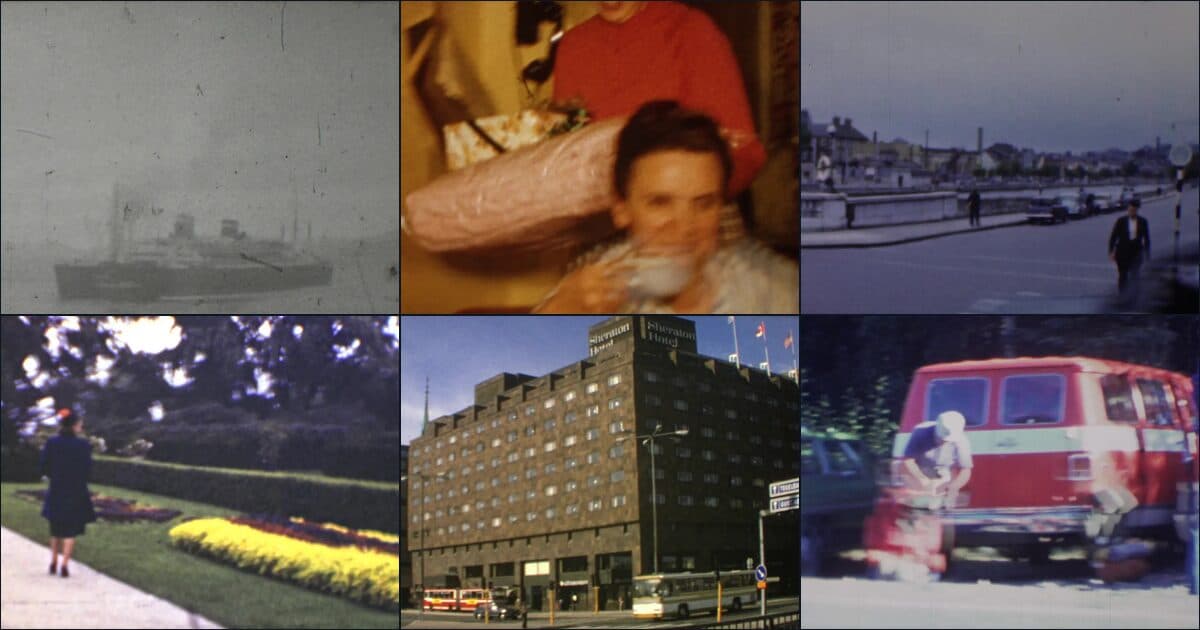
Stockfilm is a specialist archive built from physical film reels, 8mm and Super 8 home movies. It exists for one kind of footage: candid everyday life that news crews and studios did not usually record. Christmas mornings, road trips, storefronts, backyards, weddings, and vacations, dated by year and located by city where the evidence supports it.
Scale (native unit)162,072 published searchable clips
License modelRoyalty-free (project-scoped)
Price visibilityPublished: flat $149 for eligible direct-license clips
Resolution / deliveryRestored master per clip; HD/4K varies by clip
What it contains
As of 2026-07-27, the archive holds 217,560 restored digital masters, of which 162,072 are published searchable clips and 115,631 are available for direct on-site licensing. Footage spans the 1930s through the 1980s across 121 countries and 935 cities, held alongside 1,615 cataloged physical reels. Coverage depth varies sharply: the United States accounts for roughly three quarters of located clips, and some city-decade combinations simply do not exist in the collection.
Search and metadata
Natural-language search with geographic synonyms, visual search, decade and place filters, and hover previews on results. Clip pages carry year, location, subject, and scene metadata, plus source-reel information and original label transcriptions where available. Research boards support collaborative shortlists.
What we observed: Tested 2026-07-16 on all five standardized briefs. Strong on everyday-life briefs: 232 dated 1960s matches for the Christmas-morning brief, 183 dated 1950s matches for New York street life. Honest misses: zero results for the 1968 Democratic National Convention brief (no named-news coverage) and zero 1970s Paris street clips (Paris holdings concentrate in the 1930s-1960s).
Licensing and pricing
Eligible direct-license clips are a flat $149, which includes the stated restored master and immediate delivery. The license is royalty-free, worldwide, and perpetual within the licensed project, subject to the actual agreement and third-party-rights review. Clips not yet cleared for direct licensing are available through Pond5 and Shutterstock at marketplace prices.
Resolution and delivery
Each direct-license clip includes its restored digital master. HD and 4K availability is per clip and shown on the clip page; do not assume every clip is 4K. Restoration is conservative: no AI-generated, extended, or interpolated frames.
Research assistance
Researcher-assisted production briefs are available for teams that would rather describe the shot than run the search. Turnaround depends on the brief.
Provenance and rights
Clip dates and places carry Estimated or Unidentified confidence labels; Confirmed is reserved for records a person has reviewed against a primary source and no clip carries it yet (checked 2026-09-25). Labels are never auto-promoted to Confirmed. Reviewed clips carry content flags for people, minors, logos, trademarks, artwork, and music. A copyright license does not by itself clear privacy, publicity, trademark, music, artwork, or location rights; the Rights and Clearance panel on each clip page states what has and has not been reviewed.
Strengths
- Physical-film source archive with reel-level provenance where available
- Clip-level year, city, and subject metadata built for production search
- Published confidence labels instead of implied certainty
- Flat $149 direct licensing with immediate delivery on eligible clips
- No AI-generated or interpolated frames in the catalog
Honest limitations
- A specialist archive, not a news, celebrity, or newsreel source
- No coverage of current events; nothing after the 1980s
- Depth varies by geography and decade; the U.S. dominates located footage
- Provenance documentation and deliverable resolution vary by clip
Choose this when
- You need candid period texture: families, streets, holidays, travel
- Year and place accuracy matter to your edit or your fact-check
- You want flat-price licensing without a quote cycle
Look elsewhere when
- You need a named event, a celebrity, or broadcast news coverage
- You need newsreels, government records, or potentially free material
Best for premium editorial breadth, celebrities, and famous events
Getty Images is the broadest premium editorial source in the business. Its footage catalog folds in partner collections such as BBC Motion Gallery, NBC News Archives, Bloomberg, and ITN, which makes it the default first stop when a documentary needs a named person, a named event, or broadcast-quality coverage of the twentieth century.
Scale (native unit)718,486 videos tagged archival on gettyimages.com
License modelRoyalty-free and rights-ready/editorial
Price visibilityQuote required for video (UltraPack or enterprise)
Resolution / deliveryUp to 4K advertised
What it contains
Editorial and archival video spanning news, sport, and entertainment, described by Getty as over a million hours of footage, with 718,486 videos under its archival tag at verification. Strong on people and moments that were professionally filmed.
Search and metadata
Public search works without an account and results are relevant. Editorial and creative families are separated. Filters beyond the family tabs render client-side, so plan on refining inside the site.
What we observed: Tested 2026-07-16 without an account: the query "1950s New York street" returned 574 editorial video results, highly relevant. No prices shown on results; video licensing routes through UltraPacks or enterprise agreements.
Licensing and pricing
Most creative content is royalty-free; editorial video is licensed rights-ready, priced by how, where, and how long you use it. Per-clip video prices are not published. Video licensing goes through UltraPack download packs or enterprise subscriptions with custom pricing, so budget for a quote cycle.
Resolution and delivery
Getty advertises stock video in HD and 4K. Availability is per clip.
Research assistance
A formal Rights & Clearance service will identify rights holders, negotiate permissions, and handle contracts, with an initial free assessment. Genuinely useful on complex clearances.
Provenance and rights
Editorial content carries editorial-use restrictions, and Getty is explicit that clearing third-party rights for commercial use is a separate exercise, which its Rights & Clearance team sells as a service.
Strengths
- Unmatched breadth of professionally shot editorial and news footage
- Exclusive partner collections covering broadcast history
- Working public search with relevant results and no login wall
- Established rights-and-clearance service for complex projects
Honest limitations
- No published per-clip video pricing; expect quotes and sales contact
- Premium positioning prices out many independent productions
- Candid amateur everyday life is not its core strength
Choose this when
- You need a specific famous person, event, or broadcast moment
- Your production has clearance questions a staffed team should handle
Look elsewhere when
- You need flat, published pricing or a small-budget license
- You want unstaged home-movie texture rather than news coverage
Best for global news and entertainment history
The Associated Press holds one of the deepest news film and video archives in the world: over 2 million video stories reaching back to 1895, including the entire British Movietone collection. When the brief names a place, a date, and an event that made the news anywhere on earth, AP is one of the first calls.
Scale (native unit)2 million+ video stories
License modelNegotiated editorial licensing
Price visibilityNo public pricing; contact required
Resolution / deliveryHD advertised for restored collections
What it contains
Global news and entertainment coverage across the twentieth and twenty-first centuries, plus the British Movietone newsreel library. AP also holds tens of millions of editorial images and audio clips.
Search and metadata
The former standalone aparchive.com search has been folded into AP Newsroom. Public, logged-out search could not be verified at our verification date, so plan on registering or emailing the archive team.
What we observed: Not tested. aparchive.com now redirects into AP Newsroom, a login-oriented application we could not evaluate without an account.
Licensing and pricing
No public rate card. Licensing is negotiated per use through AP's sales and research staff.
Resolution and delivery
AP promotes rare and previously unseen footage in high definition, including Movietone material. Per-item resolution varies.
Research assistance
AP offers research assistance through its archive contact channels, a practical necessity given the collection is far larger than any public interface shows.
Provenance and rights
Professional news provenance: shot lists, dates, and story metadata maintained by a news agency. Editorial licensing terms govern use; third-party rights in the footage still need review for commercial contexts.
Strengths
- More than 2 million news video stories dating back to 1895
- Holds the complete British Movietone newsreel collection
- News-agency metadata and verification standards
Honest limitations
- No public pricing and an account-oriented workflow
- Everyday domestic life appears mostly when it made the news
- Turnaround depends on inquiry volume and rights complexity
Choose this when
- You need verified news coverage of a named event, anywhere in the world
- You need newsreel-era material with agency provenance
Look elsewhere when
- You want instant self-service downloads at published prices
- You want candid amateur footage rather than reported stories
Best for classic twentieth-century newsreels
British Pathé is the reference newsreel archive: 85,000 films spanning 1896 to 1978 covering wars, royalty, sport, fashion, and everyday public life as the newsreel cameras saw it. The whole catalog streams free on its site, which makes it one of the most pleasant archives to research even before licensing.
Scale (native unit)85,000 films (plus 12 million stills)
License modelRights-managed (per-clip or per-second)
Price visibilityPrices shown in checkout for self-serve uses; quotes for broadcast
Resolution / deliveryHD; 2K/4K scanning from original reels usually available
What it contains
The complete Pathé newsreel and cinemagazine output plus 12 million stills, with the Reuters historical collection (130,000+ items, 1910-1984) represented alongside.
Search and metadata
Keyword search with free full-length viewing of every film. Newsreel metadata is issue-based, so expect to skim reels rather than filter by granular scene tags.
What we observed: Not tested live: the site sits behind a bot challenge our tools cannot pass. British Pathé states the entire 85,000-film archive is viewable free on its website.
Licensing and pricing
Many uses (advertising, websites, museum display, student films) license per clip through an online checkout where the price depends on platform, territory, and duration. Broadcast and bespoke uses are quoted per second of footage used, with a 60-second minimum that can be pooled across clips, plus a file transfer fee.
Resolution and delivery
Standard delivery is broadcast-quality digital files; original 16mm and 35mm reels can usually be rescanned to HD, 2K, or 4K on request.
Research assistance
The licensing team fields bespoke requests and subscriptions for museums and schools; there is no free research service advertised.
Provenance and rights
Provenance is inherent: this is the original newsreel library, with issue dates and production records. Rights-managed terms mean each use is licensed specifically.
Strengths
- Definitive newsreel coverage of 1896-1978 with free full-catalog viewing
- Self-serve per-clip licensing for many non-broadcast uses
- Rescanning from original film for HD, 2K, or 4K delivery
Honest limitations
- Collection ends in 1978; nothing later
- Newsreels show public and staged life, not private candid moments
- Broadcast licensing is quote-based with per-second fees
Choose this when
- You need classic newsreel coverage or British and Commonwealth history
- You want to preview everything free before spending anything
Look elsewhere when
- You need footage after 1978
- You need candid domestic interiors and family life
Best for deep researcher-assisted private holdings, music, television, and specialty footage
Historic Films is the archive you call when the brief is strange. Fifty thousand plus hours spanning 1895 to 2010 take in news, home movies, music performances, vintage television, commercials, and collections bought from private collectors, and its librarians will actually go digging for you.
Scale (native unit)50,000+ hours
License modelRights-managed
Price visibilityPublished fee page: $100 research fee, $500 license minimum
Resolution / deliveryVaries by source material
What it contains
One of the broadest private archives in the industry: music and TV performance history, lifestyle and fad footage, home movies, industrials, silents, and cartoons, much of it not represented in the online catalog.
Search and metadata
Public search works without an account and returns dated, well-tagged results with useful facets. For anything the catalog does not surface, the staff research route is the real interface.
What we observed: Tested 2026-07-16 without an account: "1950s New York street" returned 24 highly relevant results with filters for year, color, availability, resolution, and genre. No prices on results; ordering goes through an inquiry flow.
Licensing and pricing
Rights-managed with an unusually transparent fee page: a $100 research fee on most orders (deducted from your footage order), a $500 standard license minimum, and published mastering and delivery charges. Per-second license rates still vary by rights and collection.
Resolution and delivery
Delivery format and resolution vary with the source material, from film scans to broadcast tape transfers.
Research assistance
Professional librarians handle requests by phone or email, and a Pro account tier provides screener downloads from specialty collections.
Provenance and rights
Collection-level provenance from acquired archives; rights-managed licensing scoped per use.
Strengths
- Very broad 1895-2010 holdings including material nobody else has
- Real research staff who take on hard briefs
- Published fee structure, rare among researcher-driven archives
Honest limitations
- Online catalog covers only part of the holdings
- Not built for instant self-service delivery
- Resolution and quality vary widely by source
Choose this when
- Your brief is obscure and you want a human on the hunt
- You need music, TV, or specialty footage with negotiated rights
Look elsewhere when
- You need immediate download and flat pricing
- Your budget cannot absorb a $500 license minimum
Best for broad, self-service royalty-free archival marketplace
Pond5 runs the largest self-service royalty-free archival section, folding specialist contributors (Stockfilm distributes here) into one searchable marketplace with visible per-clip prices and instant download. It is the fastest route from search box to timeline when the clip you need exists in a contributor's catalog.
Scale (native unit)200,000+ archival clips (marketplace-wide: 190M+ assets of all types)
License modelRoyalty-free (Individual/Business/Premium tiers); editorial restrictions apply to some content
Price visibilityPublished per clip; video from $39; subscriptions available
Resolution / deliveryHD and 4K; varies by clip
What it contains
A dedicated archival storefront advertising 200,000+ archival clips of vintage lifestyle, historical classics, and wartime imagery, inside a marketplace of over 190 million assets across all media types. It also hosts a free collection and a Public Domain Project.
Search and metadata
Standard marketplace search with previews and per-clip pricing. Metadata quality varies by contributor, so date and place accuracy depends on who uploaded the clip.
What we observed: Not tested live: pond5.com blocks automated fetching. Facts verified from official page captures dated January to July 2026.
Licensing and pricing
Royalty-free licensing in Individual, Business, and Premium tiers, with editorial-use restrictions on content that lacks releases. Video starts at $39 per clip, with credit packs and a Footage Plus subscription ($199 per month for 10 downloads at the time of verification). Prices are visible before you buy.
Resolution and delivery
HD and 4K are both offered; the available resolution is per clip and shown on the item page.
Research assistance
No archival research desk; you are the researcher. Support handles licensing questions.
Provenance and rights
Provenance is whatever the contributor supplied. Specialist contributors document sources well; others do not. Editorial-only content cannot be used commercially without additional clearance.
Strengths
- Largest self-service archival marketplace with visible prices
- Instant download and simple royalty-free terms
- Aggregates many specialist archives in one search
Honest limitations
- Metadata and restoration quality vary by contributor
- No research assistance for hard briefs
- Editorial-flagged clips still need commercial clearance
Choose this when
- You want to search broadly, see prices, and download today
- Your brief is common enough that a marketplace will have it
Look elsewhere when
- You need documented provenance or a researcher's help
- You need a named event with agency verification
Best for general-stock and enterprise workflow that also includes archival material
Shutterstock is a general stock platform first, with archival footage folded into its editorial arm, including The Vault, the partner archive program spanning collections from AP, ITV, and others. Teams already running Shutterstock subscriptions get archival access inside a familiar enterprise workflow, which is its real pitch. Pond5 has been a Shutterstock brand since 2022, but the two remain separate storefronts with separate catalogs, prices, and licenses.
Scale (native unit)30M+ videos (all types, not archival-specific)
License modelRoyalty-free Standard/Enhanced; editorial-only for unreleased content
Price visibilityPublished subscription and pack pricing; editorial video by contact
Resolution / deliveryHD and 4K
What it contains
Over 30 million videos across the general library, plus editorial video collections and The Vault partner archives. Archival is a genre within the catalog, not the catalog.
Search and metadata
Standard stock search with editorial separation. Archival discovery competes with modern stock in the same interface.
What we observed: Not tested live: shutterstock.com blocks automated fetching. Facts verified from official page captures dated January to June 2026.
Licensing and pricing
Published video subscriptions and download packs cover the general library under Standard or Enhanced royalty-free licenses (Enhanced removes audience and distribution limits). Editorial and Vault video is licensed per clip through sales contact rather than list prices.
Resolution and delivery
HD and 4K, varying by clip.
Research assistance
No archival research service; enterprise accounts get account management rather than footage researchers.
Provenance and rights
Editorial-only content is explicitly not cleared for commercial use. Partner-archive provenance follows the source collection. Standard stock metadata otherwise.
Strengths
- One workflow for modern stock and archival needs
- Published subscription pricing for the general library
- The Vault brings major partner archives into one program
Honest limitations
- Archival is a side door, not the main offering
- Editorial and Vault video means contacting sales, not checkout
- Separate from Pond5 despite shared ownership; benefits do not transfer
Choose this when
- Your team already licenses through Shutterstock at volume
- You mix modern stock and archival in one production
Look elsewhere when
- You want archival-first search and metadata
- You want published per-clip archival prices
Best for instant-download government, military, aviation, and political history
CriticalPast digitized a mountain of declassified U.S. government film and newsreels and put it behind a plain per-clip checkout: masters run $95 to $295, licensing is royalty-free worldwide in perpetuity, and files are typically ready within the hour. For military, aviation, propaganda, and political history on a deadline, it is hard to beat.
Scale (native unit)59,000+ historic clips (plus 7 million stills)
License modelRoyalty-free, worldwide, in perpetuity
Price visibilityPublished per clip: masters $95-$295
Resolution / deliveryHD (1920x1080) masters; no 4K advertised
What it contains
More than 59,000 clips and 7 million stills spanning the twentieth century, drawn largely from U.S. government sources plus Ford and Universal newsreels: both world wars, Korea, Vietnam, the Cold War, aviation, space, and civil-rights era coverage.
Search and metadata
Keyword search with documented operators and facets for decade, location, color, and sound. Free time-coded screeners let you cut with placeholders before buying.
What we observed: Not tested live: criticalpast.com blocks automated fetching. Search operators and decade, location, color, and sound facets are documented in the official FAQ (captured 2026-05-06).
Licensing and pricing
Royalty-free, worldwide, perpetual, all-media licensing with published per-clip prices ($95-$295 for full-resolution masters at verification). No per-second math, no quote cycle.
Resolution and delivery
Masters are 1080p HD (ProRes or XDCAM); early material is pillarboxed. No 4K tier is advertised; custom re-transfers cost extra.
Research assistance
Essentially self-service; the free screener system substitutes for a research desk.
Provenance and rights
Clips identify their U.S. government source record on the license. Much of the underlying material is public record that CriticalPast has digitized, cataloged, and made instantly deliverable; you are paying for access, metadata, and delivery rather than for the underlying copyright in many cases.
Strengths
- Published prices and genuinely fast self-service delivery
- Deep military, government, aviation, and political holdings
- Free full-length time-coded screeners for offline edits
Honest limitations
- HD ceiling; no 4K catalog
- Skews hard toward government and military subjects
- Overlaps material that also exists free at NARA, without the handling
Choose this when
- You need WWII-to-Cold-War era government footage today
- You want fixed prices and immediate delivery
Look elsewhere when
- You need 4K masters
- You need civilian everyday life or non-U.S. coverage
Best for rare private collections, subcultures, street life, music, fashion, and unusual material
Kinolibrary, a London agency, represents rare private collections other archives do not have: subcultures, street style, rave footage, music, fashion, and home movies from the 1930s onward. Its free same-day research service, with low-res screeners delivered while you wait, makes it one of the friendliest doors into rights-managed rarities.
Scale (native unit)Not published
License modelRights-managed, commercial projects only
Price visibilityNo rate card; priced per project
Resolution / deliverySD to 4K masters depending on the collection
What it contains
A curated span from 1890s trick films to recent decades, including dedicated home-movie collections from the U.S. and U.K. No public total; much of the catalog is offline and surfaced by its researchers.
Search and metadata
Public search and browsing with decade, country, color, resolution, and format filters, backed by researchers who search the full offline database on request.
What we observed: Not tested: search is a client-rendered application without crawlable results. Public filters cover decade, country, color, master resolution, and original format (verified live 2026-07-16).
Licensing and pricing
Rights-managed and commercial-only, priced per second for editorial and per shot for drama and advertising, with no published rate card. Expect a conversation, not a checkout.
Resolution and delivery
Masters range from SD to 4K depending on the collection; delivery is clean high-res files.
Research assistance
Free same-day research with screeners and bespoke compilations is the house specialty.
Provenance and rights
Collection-level provenance from acquired and represented private archives; rights cleared per license.
Strengths
- Material that genuinely is not anywhere else
- Free same-day research with preview compilations
- Strong curation across subcultures, music, and street life
Honest limitations
- No published prices and commercial projects only
- No public measure of collection size
- Client-side search makes casual browsing harder
Choose this when
- The brief is visually unusual and mainstream archives came up dry
- You value a researcher who replies the same day
Look elsewhere when
- You need instant self-service licensing or personal-use rights
- You need published pricing for a fixed budget
Best for ephemeral films that carry an applicable reuse designation
Rick Prelinger's collection of ephemeral films (advertising, educational, industrial, and amateur productions) is the classic free starting point for mid-century American texture, hosted for free download on the Internet Archive. The catch everyone gets wrong: reuse rights are item by item, and Prelinger's own site says plainly that some films are public domain and many are not.
Scale (native unit)10,376 items in the Internet Archive prelinger collection
License modelItem-level: Creative Commons or public-domain designations vary per film
Price visibilityFree access; commercial licensing of masters via Getty Images
Resolution / deliveryMostly SD-era digitizations (roughly 480-line MPEG)
What it contains
Roughly 10,376 items online: classroom films, industrials, advertising, and home movies documenting American life, technology, and social norms across the twentieth century.
Search and metadata
Internet Archive keyword search with facets. Metadata quality varies; descriptions and shotlists are separately copyrighted by Prelinger and Getty and cannot be reproduced commercially without permission.
What we observed: Tested 2026-07-16 via the Internet Archive search API: the brief "1970s Paris street" returned one item, not clearly relevant. Ephemeral American films dominate; granular place-and-decade briefs often miss.
Licensing and pricing
Free downloading and reuse per the Creative Commons or public-domain designation shown on each film's detail page. Commercial licensing of higher-quality masters runs through Getty Images, where over 19,000 Prelinger-derived clips are offered.
Resolution and delivery
The legacy digitization program produced roughly 480-line MPEG files. Do not promise HD from the free collection.
Research assistance
None. You browse, you download, you verify.
Provenance and rights
The official guidance is explicit: do not assume every film is public domain or carries a Creative Commons license. Check each item's rights note, and remember that underlying elements (music, people, trademarks) may need review even on public-domain films.
Strengths
- Free, immediate access to a landmark ephemeral-film collection
- Rich mid-century American cultural material
- Clear per-item rights designations when present
Honest limitations
- Rights vary per film; many are not public domain
- SD-era file quality on the free downloads
- Heavily U.S.-centric; granular briefs often miss
Choose this when
- Budget is zero and your subject is mid-century American culture
- You are prepared to verify rights item by item
Look elsewhere when
- You need HD or 4K masters (or license Prelinger material via Getty)
- You need indemnified, professionally cleared licensing
Best for raw U.S. federal, military, government, and space holdings
NARA holds the official film record of the U.S. government: 520,400 film reels plus 170,925 video recordings of military operations, NASA missions, presidential history, and agency filmmaking. It is the primary source everything else copies, free to use where the material is a government work, and famously not a stock-footage shop.
Scale (native unit)520,400 film reels (plus 170,925 video recordings)
License modelNo licensing: government works are generally public domain, but holdings include restricted and copyrighted material
Price visibilityAccess free; reproduction costs vary, no fixed price list
Resolution / deliveryVaries; many digitized files are SD
What it contains
Federal agency film and video from across the twentieth century: military combat and training film, space program coverage, government documentaries, and donated collections.
Search and metadata
The National Archives Catalog offers keyword search with a growing set of digitized files downloadable free. Large parts of the holdings are undigitized and require ordering reproductions or visiting College Park.
What we observed: Not tested: the National Archives Catalog is an application requiring interactive access; automated evaluation was not possible.
Licensing and pricing
NARA does not license content and does not grant exclusive publication rights. Viewing and downloading digitized records is free; professional reproductions carry transfer and handling fees that vary by order, with a four-to-six week minimum turnaround, and approved vendors publish their own rates.
Resolution and delivery
Digitized files vary widely; plan on SD for much of the online catalog, with new scans possible through reproduction orders.
Research assistance
Archives staff assist with finding aids, and NARA maintains a list of independent researchers for hire.
Provenance and rights
The gold standard for provenance and the sharpest rights caveat in this guide. NARA states that its holdings include material restricted by copyright, contract, or publicity rights, that it does not confirm copyright status, and that responsibility for subsequent use lies solely with the end user.
Strengths
- The definitive primary source for U.S. government footage
- Free access to a growing digitized catalog
- Unimpeachable provenance for federal records
Honest limitations
- Not all holdings are public domain; rights review is on you
- Slow reproduction pipeline for undigitized material
- No licensing support or commercial service layer
Choose this when
- You need the primary government record, not a repackaged copy
- Your timeline tolerates research and ordering lead times
Look elsewhere when
- You need the same material instantly with handling done (CriticalPast)
- You need someone else to carry rights risk
Best for downloadable American historical and cultural primary sources
The National Screening Room publishes films from the Library of Congress's moving-image vaults, spanning 1890 to 1999: fiction, home movies, newsreels, and actualities chosen by curators. Public-domain titles download free in both MP4 and ProRes, which makes it one of the few free sources that hands you an edit-friendly master.
Scale (native unit)Not published
License modelRights vary per item; public domain downloadable, in-copyright stream-only
Price visibilityFree
Resolution / deliveryMP4 plus ProRes 422 MOV downloads for most downloadable titles
What it contains
A curated cross-section of American film history, including material otherwise unavailable anywhere, with home movies and actualities alongside studio and news film.
Search and metadata
Standard loc.gov collection browsing and search with item pages carrying curatorial notes and rights statements.
What we observed: Not tested: loc.gov blocked automated access at verification time.
Licensing and pricing
Free. Public-domain titles are fully downloadable; titles still under copyright were cleared for streaming only. The Library is explicit that rights assessment is your responsibility.
Resolution and delivery
Most downloadable titles offer both a small MP4 and a ProRes 422 MOV, an unusually production-friendly free format.
Research assistance
Ask a Librarian reference services and reading-room support rather than a footage research desk.
Provenance and rights
Library-grade provenance with per-item rights statements. Privacy, publicity, and trademark considerations remain the user's to clear.
Strengths
- Free ProRes-quality downloads on public-domain titles
- Curated selection with library-grade documentation
- Covers 1890-1999 including home movies and actualities
Honest limitations
- A curated selection, not a comprehensive searchable archive
- In-copyright titles are stream-only
- No commercial licensing or clearance services
Choose this when
- A curated public-domain American film fits your story
- You want a free master you can actually cut with
Look elsewhere when
- You need comprehensive coverage of a specific subject
- You need cleared commercial licensing with indemnities