
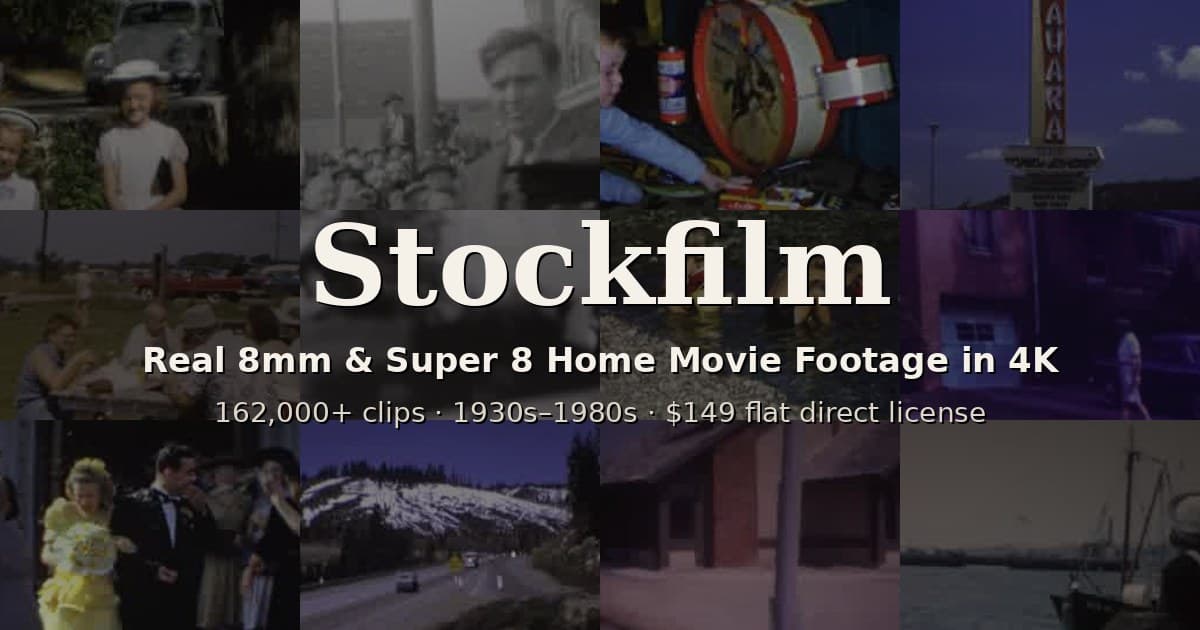
When Aramco recently released archival footage documenting the kingdom’s first oil shipment, the moment carried weight beyond historical curiosity. In an information environment saturated with synthetic media and AI-generated reconstructions, the chemical reality of celluloid—complete with color shifts, grain storms, and splice marks—functioned as a material affidavit. The footage did not merely depict history; its physical decay testified to its authenticity.
This release coincides with a broader cultural pivot visible in the viral documentation of vintage motorcycle restorations and historic mantle renovations. We are witnessing the rise of what might be called the "corporate patina" movement: a strategic embrace of material age as a trust signal. For brand teams, documentary producers, and archival researchers, this shift carries specific procurement implications. The aesthetic preference for unrestored originals over polished recreations is becoming a risk management strategy.
The Aesthetics of Material Decay
The restoration communities currently celebrating rusted metal and weathered wood are not merely indulging in nostalgia. They are responding to a fatigue with digital perfection. When every marketing asset can be algorithmically smoothed, or entirely synthesized through generative AI, the unmediated texture of chemical film becomes a competitive differentiator.
Corporate heritage campaigns—particularly those marking significant anniversaries or executive transitions—increasingly require what archivists call "witness evidence." This is footage that bears the physical scars of its creation era: the magenta shifts of Kodachrome degradation, the gate weave of hand-held Super 8, the dust embedded in the emulsion during field processing. These material characteristics function as forensic timestamps. They communicate to audiences that the content predates the synthetic media crisis currently generating deepfake concerns and undisclosed AI celebrity endorsements.
For brands with roots in the 1960s through 1990s, this creates a specific content strategy. The era of 8mm and Super 8 home movie capture represents a documentary sweet spot: recent enough to show recognizable corporate infrastructure and personnel, yet captured on a medium that resists modern forgery. Unlike digital files, which can be edited, enhanced, or entirely fabricated with seamless precision, chemically-processed film carries verification markers in its grain structure and dye layers.
Infrastructure Risk and Vendor Neutrality
The recent litigation involving Nine PBS and the loss of fifty terabytes of archival footage highlights a secondary advantage of analog source material. Digital asset management, for all its convenience, introduces vendor dependency and contractual vulnerability. When cloud storage relationships deteriorate or migration protocols fail, decades of corporate memory can evaporate into inaccessible server farms.
Chemically-stable film stock offers vendor-neutral archival infrastructure. A properly preserved 8mm reel does not require ongoing SaaS subscriptions, proprietary file format migrations, or the legal continuity of cloud storage vendors. For corporate legal teams managing long-term brand assets, this material autonomy reduces risk exposure while satisfying audit requirements for historical documentation.
This infrastructure stability becomes particularly valuable when considering the emerging licensing complexities around AI-generated content. As stock platforms navigate partnerships between synthetic media engines and licensed music libraries, the provenance chain for purely digital assets grows increasingly complex. Chemically-verified archival footage bypasses these ambiguities. The rights clearance follows traditional archival protocols—estate permissions, institutional donations, and documented chain-of-custody—rather than the uncertain training data lineages currently generating litigation in AI music and image markets.
Strategic Procurement for Heritage Campaigns
Brand managers and documentary producers approaching milestone anniversaries or heritage repositioning should consider specific procurement frameworks when sourcing archival content:
- Prioritize unrestored originals over color-corrected masters. While digital restoration can enhance accessibility, maintaining access to the unprocessed scan allows creative teams to leverage the material decay as a stylistic element.
- Verify chemical provenance. Request documentation regarding film stock type, processing chemistry, and storage history. This archive methodology documentation serves dual purposes: creative reference and legal verification.
- Plan for hybrid workflows. Modern heritage campaigns often blend archival footage with contemporary interviews. Unrestored 8mm provides the visual "anchor" that allows modern 4K footage to feel grounded in material reality, preventing the uncanny valley effect associated with AI-upscaled or generated historical B-roll.
- Secure broad usage rights. Corporate heritage content frequently migrates from broadcast documentaries to museum installations, social media campaigns, and internal training libraries. Ensure licensing agreements accommodate these multichannel applications without vendor lock-in.
Practical Applications for Production Teams
The shift toward material authenticity manifests across several production verticals:
- Sustainability storytelling: Brands with environmental commitments use decades-old 8mm footage to document long-term land use, agricultural practices, or industrial evolution without the credibility questions attached to digital reconstructions.
- Crisis communications: When addressing corporate history or institutional memory, pre-digital archival footage provides immutable visual evidence that predates current editing capabilities.
- Executive documentary: Leadership transition films increasingly incorporate personal 8mm archives to humanize corporate narratives, leveraging the intimacy of amateur chemical film against the sterility of corporate video libraries.
- Exhibit design: Physical film transfers projected in corporate museums or lobby installations offer texture that digital displays struggle to replicate, creating immersive environments that signal institutional longevity.
FAQ
How can production teams verify that 8mm footage is genuinely archival and not AI-generated?
Authentic 8mm footage exhibits specific material characteristics that current generative AI cannot reliably replicate: irregular grain structures consistent with specific film stocks (Kodachrome, Ektachrome, Tri-X), organic gate weave from hand-held camera movement, and chemical color shifts specific to aging dye layers. When sourcing footage, request scan logs showing splice marks, leader tape, and film perforations—physical elements that betray the medium’s chemical reality. Reputable archival sources maintain detailed preservation records documenting the physical condition of original reels.
What licensing considerations differ between archival 8mm and modern stock footage?
Archival 8mm footage often originates from personal collections, estate donations, or institutional archives rather than professional production companies. This requires diligent rights clearance, particularly for recognizable individuals or private property captured in amateur footage. Unlike contemporary stock, which typically offers standardized royalty-free terms, archival licensing may require estate permissions, location releases for historical sites, and clearances for music or ambient audio captured in the original recording. However, these traditional clearance pathways offer legal certainty absent from the uncertain training data origins of AI-generated content.
Why should corporate archives maintain analog originals when digital preservation is standard?
The Nine PBS litigation illustrates the vulnerability of vendor-dependent digital storage: contractual disputes, format obsolescence, and migration failures can render digital archives inaccessible. Analog film, when stored in climate-controlled environments, maintains stability independent of software updates or cloud vendor relationships. For corporate legal teams, physical film represents vendor-neutral evidence with immutable chain-of-custody documentation. Additionally, as AI generation tools improve, digital files face increasing authenticity challenges, while chemical film carries intrinsic verification markers that satisfy fact-checking protocols and forensic audit requirements.
Conclusion
The convergence of Aramco’s historical releases with the restoration culture’s celebration of material decay signals a permanent shift in corporate storytelling. As synthetic media capabilities expand and digital infrastructure proves vulnerable to vendor disputes, the strategic value of chemically-verified 8mm footage extends beyond aesthetic preference into risk management.
For documentary teams, brand managers, and archival researchers, the procurement of unrestored 8mm archives represents an investment in credibility infrastructure. In an era where digital perfection breeds suspicion, the corporate patina—visible evidence of time’s passage on chemical film—offers something that AI cannot synthesize: material proof of presence.
When planning heritage campaigns or corporate documentaries, consider how the physical characteristics of your source material communicate institutional integrity. The rust, the grain, and the color shifts are not imperfections to be corrected; they are the verification system upon which authentic storytelling now depends.