
When Ron Howard documented Jim Henson’s legacy in Jim Henson Idea Man, he relied on a delicate weave of archival footage and family anecdotes to preserve the puppeteer’s humanity. The result wasn’t merely a retrospective; it was an intimate reconstruction of creative life, built from home movies and chemically-processed 8mm fragments that captured unguarded moments between takes. This methodology signals a broader inflection point in professional production. As the entertainment industry navigates the dual pressures of 2024/2025 content trends—specifically the surge in authenticity-driven unscripted formats and the parallel rise of AI video generation tools—producers are increasingly treating family-grade archival footage not as decorative B-roll, but as narrative infrastructure.
The Verification Imperative: Chemical Specificity in an AI Era
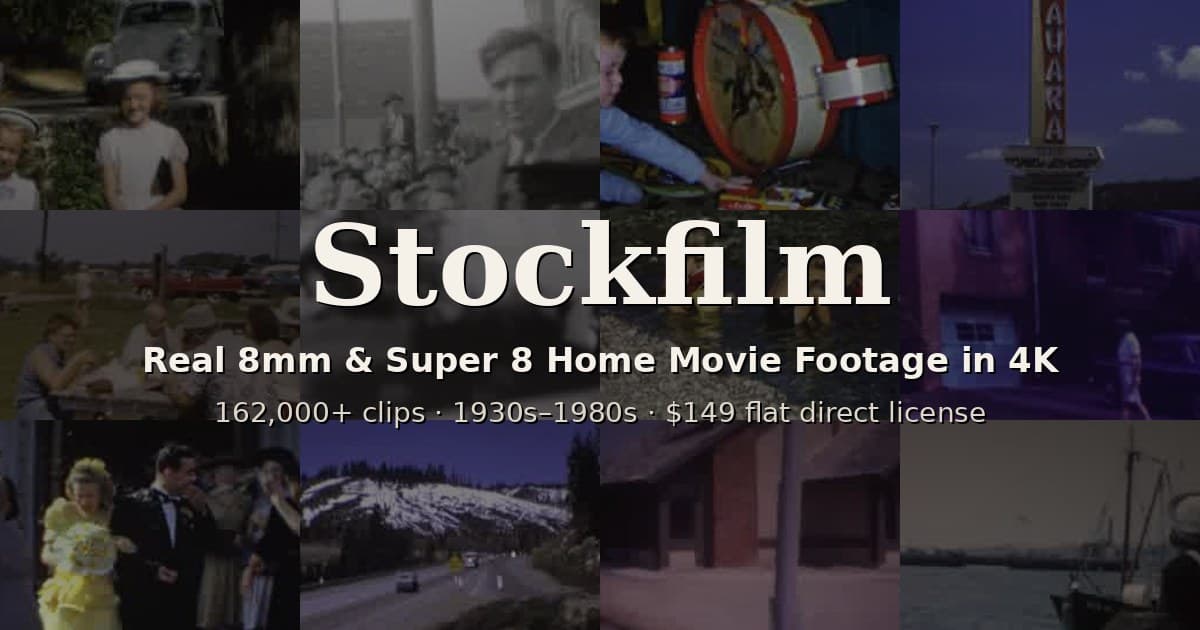
The documentary’s approach highlights a decisive shift in how creative teams evaluate source material. Rather than relying solely on polished broadcast archives or synthetic recreations, Howard’s team utilized the informal texture of Henson’s personal film collection—footage shot on consumer-grade 8mm and Super 8 cameras, characterized by uneven exposure, accidental framing, and the specific optical signatures of analog chemical processing.
This material serves functions that generative AI cannot statistically replicate. While AI video creation tools can approximate the aesthetic of the 1970s or 1980s, they cannot reproduce the exact photons that struck a particular emulsion during a specific family vacation in 1974. For productions aiming to build trust with audiences increasingly skeptical of digital manipulation—evidenced by concurrent trends in AI fact-checking and synthetic media verification—this chemical certainty becomes a production value in itself.
Four Material Advantages of Chemical Archives
Unlike institutional collections or algorithmically generated content, family-sourced 8mm footage offers distinct evidentiary assets that satisfy emerging distributor verification standards:
- Temporal Granularity: Each frame represents a unique photochemical event tied to specific emulsion batches and processing chemistry available only during narrow historical windows, creating date-stamped authenticity that synthetic media cannot forge.
- Accidental Documentation: Amateur cinematographers captured background elements—license plates, consumer packaging, architectural details—without editorial filtering, providing forensic reference points for era verification that staged recreations consistently miss.
- Material Decay Signatures: Organic deterioration patterns such as vinegar syndrome progression, dye fade curves, and base layer shrinkage create authentication fingerprints that serve as built-in provenance certificates, satisfying E&O insurers and platform verification protocols.
- Optical Physics Markers: The mechanical limitations of consumer 8mm cameras—fixed shutter angles, lens aberrations, gate weave, and registration instability—produce artifacts that signal "authentic past" to viewers on a subconscious level, creating what cinematographers term "temporal texture."
The Production Shift From Illustration to Infrastructure
The current entertainment landscape reveals a marked pivot toward "intimate nostalgia." Audiences gravitate toward content that feels discovered rather than manufactured, mirroring parallel cultural movements in heritage restoration. This reflects a production necessity: as streaming platforms commission deeper catalogs of biographical documentaries, true-crime series, and brand heritage content, the demand for footage that feels lived-in has outpaced the supply of generic period stock.
Family-grade 8mm footage satisfies this demand through "unplanned composition." Unlike professional shoots with controlled lighting and directed action, amateur home movies capture incidental background details—the model of a stove, the pattern of wallpaper, the quality of sunlight through a specific window—that ground narratives in verifiable material reality. For editors and archival researchers, these details function as forensic anchors, allowing them to cross-reference dates, locations, and social contexts with a precision that AI-generated environments cannot support.
Navigating Complex Licensing Workflows
Sourcing family-grade footage presents unique challenges compared to institutional archival licensing. Productions must verify not just copyright ownership—often held by descendants or estate executors—but also the physical condition of the film elements. Unlike studio archives with climate-controlled vaults, personal collections may have endured attic storage, exposing them to vinegar syndrome or color fading.
When footage has been chemically stabilized and digitized through archival-grade 4K scanning, producers receive master files that retain the organic grain structure and dynamic range of the original capture while meeting modern broadcast technical standards. The licensing agreement must explicitly address the chain of custody, confirming that the footage originates from physical film elements rather than digital composites—a distinction increasingly relevant for errors-and-omissions insurance carriers reviewing productions for synthetic media liability.
Production Applications for Amateur Archives
The transition of family archives from personal keepsakes to professional assets requires new workflows for producers, editors, and rights managers. In practice, this footage currently serves four distinct production needs:
- Biographical Documentary: Productions use amateur footage to illustrate the pre-fame lives of entrepreneurs, inventors, and cultural figures, leveraging the "before" state that only family collections can provide.
- Brand Heritage Campaigns: Consumer packaged goods and lifestyle brands are moving away from glossy recreations of their founding eras, instead licensing authentic home-movie footage from relevant decades to signal continuity and material integrity.
- Prestige Television: Showrunners on period dramas increasingly intercut authentic 8mm textures into title sequences and flashback sequences to create visual analog warmth that signals historical depth.
- True Crime and Investigative Journalism: Productions leverage the evidentiary weight of home movies to establish timelines and locations, using incidentally captured background details to verify witness accounts and alibis with material certainty.
Preservation as Authentication Strategy
For archival researchers and documentary teams, the decision to license authentic 8mm footage in 2024 represents a strategic response to the AI authenticity crisis. While generative tools offer speed, they cannot replicate the indexical relationship between film chemistry and physical reality that characterized pre-digital life. The accidental documentary value of home movies—the way they captured street scenes, consumer products, and social behaviors without editorial intent—provides the evidentiary weight that modern fact-checking protocols demand.
In an era where audiences increasingly question media authenticity, the ability to point to chemically-verifiable source material becomes a competitive advantage for producers. The value proposition extends beyond the visual asset to include the verification documentation that modern distribution platforms require. When documentary teams can demonstrate that their footage originated from physical film elements with traceable decay patterns and emulsion characteristics, they satisfy the tightening verification standards imposed by platforms responding to AI-labeling mandates.
Frequently Asked Questions
How do productions verify the authenticity of family-sourced archival footage?
Verification relies on physical analysis of the film elements. Authentic 8mm and Super 8 footage exhibits specific chemical characteristics—edge codes, emulsion patterns, vinegar syndrome stages, and dye fade curves—that cannot be digitally forged. Reputable archival houses provide chain-of-custody documentation and chemical provenance reports that satisfy broadcast legal standards and E&O insurance requirements.
What makes 8mm footage preferable to AI-generated recreations for intimate storytelling?
Beyond the ethical and legal considerations of synthetic media, 8mm footage provides indexical specificity—the certainty that the image records an actual moment in time through photochemical reaction. The unplanned compositions, lens artifacts, and lighting conditions inherent to amateur filmmaking create a texture of authenticity that AI models, which rely on statistical averaging of training data, cannot replicate for specific historical moments.
Can small documentary teams afford to license authentic archival footage?
Yes. While rates vary based on exclusivity and resolution, the standardization of 4K scanning has made high-quality archival footage accessible to independent productions. Many archival collections now offer flexible licensing for festival rights with options to upgrade to broadcast or streaming clearances upon distribution, reducing upfront risk for documentary teams.
Conclusion
The convergence of entertainment trends favoring unscripted intimacy and the technical necessity for verification in an AI-saturated market has elevated family-grade 8mm footage from nostalgic curiosity to essential production infrastructure. As the Jim Henson documentary demonstrates, the future of legacy storytelling lies not in synthetic resurrection, but in the careful preservation and licensing of the chemically-captured moments that actually happened—imperfect, specific, and irreplaceable.