
The Chemical Credential: Why Heritage Brands Are Trading AI for 8mm
When Robert F. Kennedy Jr. launched his “Real Food” campaign using AI-generated videos of imagined pastoral scenes, the irony was not lost on production professionals. Here was a message built on authenticity and tradition, delivered through synthetic pixels that never touched soil or silver halide. The moment crystallized a broader market tension: in an era where algorithms can generate convincing vintage aesthetics in seconds, “looking real” has become dangerously disconnected from “being real.”
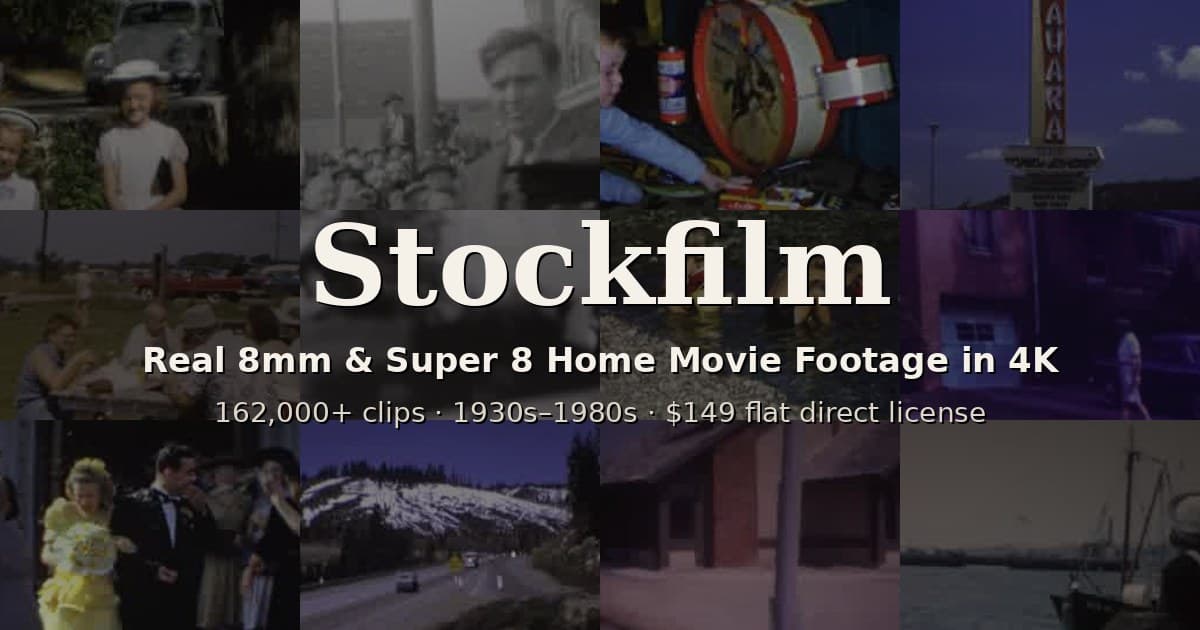
For brand managers, documentarians, and commercial editors, this disconnect carries legal and ethical weight. As platforms implement stricter labeling requirements for AI-generated content and consumers grow skeptical of synthetic media, production teams are reconsidering their source materials. The result is a decisive turn toward chemically-verifiable archival footage—specifically 8mm and Super 8 film—as a material guarantee of authenticity that no diffusion model can counterfeit.
The Authenticity Paradox in Modern Marketing
The marketing animation sector is projected to see significant growth through 2033, driven by demand for visually compelling heritage storytelling. Yet this demand coincides with a crisis of confidence. AI-generated clips passing as historical footage—whether of Iranian missile strikes or imagined 1950s farmscapes—have created an environment where digital imagery defaults to suspicion.
For heritage brands in food, beverage, automotive, and luxury goods, this skepticism poses a specific threat. These categories trade on provenance, lineage, and trust. When a craft whiskey brand claims “since 1890” or a family-owned pasta company emphasizes generational recipes, the visual evidence supporting those claims must withstand scrutiny. AI-generated sepia tones and synthetic grain patterns no longer suffice; they carry the risk of false advertising liability and consumer backlash.
The distinction lies in chemical provenance. Archival 8mm film comprises physical silver halide crystals suspended in gelatin, exposed to light through mechanical processes, and chemically fixed in time. These material qualities create what archivists call an “immutable timestamp”—chemical and physical characteristics that cannot be reverse-engineered by generative models. Light leaks, gate weave, and organic color shifts constitute a signature of reality that algorithms can approximate but never authentically replicate.
How Chemical Verification Builds Brand Equity
The shift toward chemically-preserved archival footage reflects a deeper change in how brands construct trust architecture. Rather than simulating nostalgia, companies are licensing actual historical records—authentic home movies, industrial films, and documentary outtakes that place their brand narrative within verifiable history.
Consider the production workflow for a heritage campaign:
- Temporal Anchoring: Using 1960s Super 8 footage of actual family farms to support “farm-to-table” claims, providing material evidence of agricultural practices from the era.
- Founding Narratives: Licensing 8mm home movies from specific decades to visualize company origin stories with documented visual culture rather than recreated scenes.
- Legacy Product Lines: Pairing limited-edition “throwback” packaging with contemporaneous footage from the referenced era, creating coherent temporal branding.
- Supply Chain Transparency: Intercutting modern manufacturing with archival footage of historical production methods to demonstrate continuity and craft heritage.
These applications leverage what preservationists term the “chemical credential”—the understanding that film stock carries physical properties (acetate base deterioration patterns, emulsion chemistry, dye stability) that serve as forensic proof of origin. Unlike digital files, which offer no material distinction between captured reality and generated fiction, archival film provides documented provenance through its very substrate.
Production Workflows and Licensing Outcomes
For editors and commercial producers, integrating archival 8mm into modern campaigns requires adjusted workflows but offers distinct advantages over AI generation. The initial impulse might suggest that generating synthetic vintage footage offers faster turnaround. However, the revision cycles required to make AI output legally defensible—verifying that no training data infringes on existing copyrights, ensuring no unintended modern elements appear in historical scenes, and adding disclaimers—often exceed the timeline of rights-managed archival licensing.
Moreover, the legal landscape is shifting. Emerging regulations around synthetic media disclosure mean that AI-generated “historical” footage may soon require prominent labeling, undermining the immersive effect that heritage brands seek. Archival footage carries no such requirement; its authenticity is self-evident and legally protective.
Production teams are increasingly building “material verification” into their post-production pipelines. This involves sourcing footage from archives that provide detailed chain-of-custody documentation, ensuring that the chemical characteristics of the film match the claimed era. For brand heritage campaigns, this documentation becomes part of the campaign’s legal and marketing asset package, offering protection against authenticity challenges.
The Material Difference
The specific qualities of 8mm and Super 8 film resist synthetic mimicry not through perfection, but through imperfection. The irregular gate weave of consumer film cameras, the unpredictable flaring of amateur lenses, and the particular color rendering of Kodachrome and Ektachrome stocks create a texture of human presence. These are not flaws to be cleaned up; they are the very signals of authenticity that audiences subconsciously register as “real.”
As the volume of AI-generated content increases, these material signals gain value. They function as trust anchors in visual environments increasingly flooded with synthetic media. For documentary teams covering historical subjects, for agencies building luxury brand narratives, and for archival researchers verifying visual evidence, the chemical credential offers something that computational power cannot purchase: the physical residue of actual human experience captured on celluloid.
Frequently Asked Questions
How can production teams verify that licensed archival footage is genuinely film-based and not AI-generated?
Authentic 8mm and Super 8 footage exhibits specific material characteristics including organic grain structures, chemical color dye layers specific to historic film stocks, and mechanical registration irregularities (gate weave). Reputable archives provide provenance documentation detailing the physical source materials. Chemical analysis of the film base—distinguishing between acetate, polyester, or nitrate stocks—provides additional verification that the footage predates digital capture technology.
What licensing considerations apply when using archival footage for commercial brand campaigns?
Commercial use requires rights-managed licensing that specifically covers advertising, promotional, and branded content applications. Unlike AI-generated content, which may carry uncertain training-data liabilities, properly licensed archival footage comes with clear intellectual property chains. Production teams should verify that the archive holds synchronization rights, master use rights, and appropriate clearances for any recognizable individuals or private property captured in the historical footage.
Does sourcing authentic archival footage slow down production compared to AI generation?
While AI tools offer rapid initial generation, the total production timeline often favors archival licensing when legal review and authenticity verification are factored. AI-generated content requires extensive legal review to ensure no inadvertent trademark infringement or “style mimicry” of existing copyrighted works. Archival footage, properly licensed, provides immediate legal certainty and often requires less revision because the footage carries inherent narrative authenticity that AI struggles to replicate convincingly.
Conclusion
The turn toward chemically-verifiable 8mm footage represents more than a stylistic preference for analog textures. It signals a recognition that in an age of synthetic media, trust must be built on material evidence rather than algorithmic approximation. For brands, documentarians, and production teams navigating an increasingly skeptical visual culture, the chemical credential offers a path forward—one rooted in the physical reality of silver halide, mechanical shutter clicks, and the irreplaceable texture of recorded human history.