
The recent proliferation of AI-generated "slopaganda"—synthetic video crafted to influence political sentiment without regard for factual accuracy—has exposed a critical vulnerability in contemporary documentary production. When artificially generated clips of nonexistent news coverage or fabricated historical events can circulate alongside authentic records, the burden of verification shifts from the audience to the production team. For documentarians working on local histories, institutional heritage projects, or place-based narratives, this challenge is particularly acute. Unlike major news organizations with dedicated forensic teams, independent producers and regional archives often lack the resources to debunk sophisticated synthetic media.
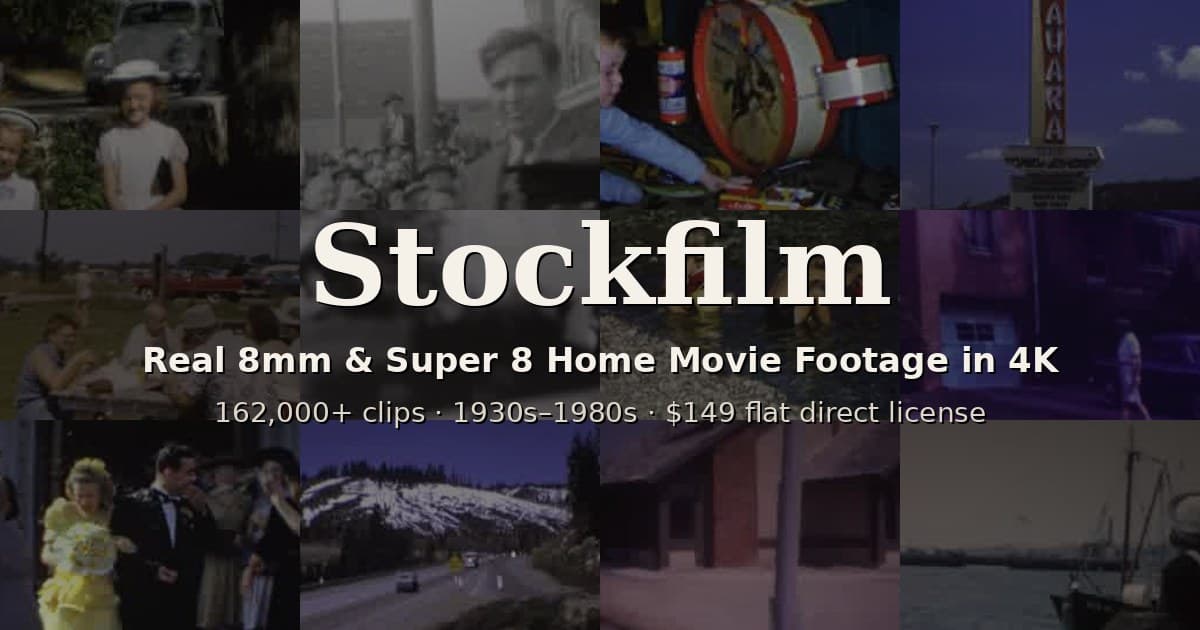
This credibility gap has sparked renewed interest in an unlikely source of visual authority: vernacular 8mm and Super 8 footage captured by non-professionals. From camera clubs documenting mid-century urban development to families recording agricultural fairs on chemically-processed film, these community-grade archives offer something generative AI cannot statistically replicate—the physical evidence of light interacting with silver halide crystals at a specific moment in time.
The Authenticity Crisis in Local Narrative
The AI misinformation crisis has migrated from high-profile political deepfakes into the granular texture of everyday history. Recent reports of synthetic video targeting regional separatist movements and fabricated news segments spreading across social platforms demonstrate that smaller markets and niche historical subjects are no longer immune to contamination. For documentary teams covering topics like the restoration of century-old windmills, the evolution of regional transit systems, or the history of local film studios, the risk is twofold: not only must they avoid inadvertently using AI-generated filler, but they must also establish sufficient provenance to satisfy increasingly skeptical distributors and audiences.
Local and regional histories face disproportionate vulnerability because they often lack the extensive digital paper trails that accompany major political events or celebrity archives. When a documentary crew in Bundaberg uncovers rare footage of municipal development, or when Ghanaian filmmakers access decades of national broadcast archives, the authenticity of those images becomes paramount. The audience cannot rely on collective memory to verify a street corner's architectural details or the specific livery of a regional bus line from 1974. Without material verification, these visual primary sources risk dismissal as potential "slop"—synthetic noise generated to fill content quotas.
The Materiality of Community Memory
Vernacular 8mm footage possesses inherent authentication markers that resist digital fabrication. Unlike AI-generated video, which simulates photons through statistical prediction, chemically-processed film records the physical behavior of light as it passed through a lens and struck emulsion. This material reality creates forensic characteristics—grain structure, color dye fade patterns, registration stability, and optical artifacts—that serve as timestamps of authenticity.
Community-captured footage offers additional layers of verification through contextual specificity. Amateur cinematographers rarely composed shots with narrative intent; instead, they recorded what professionals might ignore: the background traffic, incidental signage, weather conditions, and unguarded behavioral tics of bystanders. These unintentional documentaries capture the "noise" of reality—details that AI models, trained on cleaned datasets and intentional compositions, struggle to hallucinate convincingly.
The preservation of these materials requires methodologies that respect their chemical origins. Our preservation process maintains the physical integrity of these community artifacts while creating accessible digital intermediates for modern post-production workflows. This approach ensures that the material verification markers remain intact and examinable.
Verifying the Vernacular
Documentary producers working with non-professional archives must develop authentication protocols suited to footage that lacks studio provenance or celebrity chain-of-custody. Unlike commercial outtakes or newsreel archives, community-grade 8mm often surfaces through estate sales, attic discoveries, or institutional basement transfers without comprehensive documentation.
Effective verification focuses on material consistency rather than paper trails:
- Chemical signature analysis: Examining dye layers and emulsion characteristics to confirm manufacture dates and processing chemistry consistent with claimed provenance
- Optical physics review: Assessing lens distortion, depth of field, and light behavior against the technical limitations of consumer 8mm equipment from specific eras
- Contextual cross-referencing: Matching background elements—vehicle models, architectural details, fashion items—against historical records to establish temporal anchors
- Degradation pattern recognition: Authenticating natural vinegar syndrome, color shifts, or base curling that follows predictable chemical trajectories
Our archive methodology incorporates these material verification techniques to ensure that vernacular footage meets professional broadcast standards while retaining its unvarnished authenticity.
Production Value Beyond Nostalgia
Contemporary documentary teams are integrating community-grade 8mm footage into sophisticated narrative structures that extend far beyond nostalgic montage. In the current production environment, this material serves as primary source documentation for investigative narratives, as B-roll that resists AI-contamination concerns, and as aesthetic counterpoints to high-resolution contemporary footage.
The value proposition lies in the footage's resistance to synthetic substitution. As streaming platforms and educational distributors implement stricter content authentication requirements—particularly for historical programming—materials that can demonstrate chemical origins carry reduced liability risk. Production insurance policies and errors & omissions coverage increasingly favor verifiable archival sources over synthesized reconstructions or ambiguous digital transfers.
For teams documenting institutional histories—whether celebrating the centennial of a film studio or tracing the evolution of municipal infrastructure—vernacular footage provides the visual substrate that connects organizational memory to community experience. These images capture not just the official history, but the ambient reality in which institutions operated: the clothing of visitors, the vehicles in parking lots, the weather on opening days. Documentary series productions have leveraged these materials to build credible temporal bridges that satisfy both historical accuracy standards and contemporary aesthetic demands.
From Attic to Assembly
Integrating vernacular 8mm into professional workflows requires specific technical considerations. Unlike standardized production footage, community-captured film often exhibits variable exposure, non-standard frame rates, and physical damage that must be addressed without destroying authentication markers.
Modern restoration techniques can stabilize images and correct color degradation while preserving the organic texture that signals authenticity to audiences. The goal is not to make vintage footage appear contemporary, but to present it with sufficient clarity that the historical details—the specific textures of fabric, the architectural nuances, the environmental conditions—remain legible and verifiable.
Colorists and online editors working with these materials should resist the temptation toward over-correction. The slight flicker of handheld 8mm, the minor exposure shifts as amateur operators adjusted to changing light, and the organic grain structure all serve as visual cues that distinguish chemical reality from synthetic generation. These "imperfections" function as authentication watermarks in an era of algorithmic perfection.
Frequently Asked Questions
How can producers verify the authenticity of 8mm footage that lacks professional provenance?
Verification relies on material analysis rather than paperwork. Chemical film exhibits specific physical characteristics—grain structure, dye layers, and optical behavior—that correspond to manufacturing dates and processing chemistry. Cross-referencing visual details within the footage (vehicles, signage, fashion) against historical records provides additional temporal verification. Professional archival suppliers conduct these material analyses to authenticate community-grade footage before licensing.
Why is vernacular footage considered more resistant to AI contamination than professional archives?
Vernacular footage resists AI synthesis because it contains unintentional visual "noise"—incidental background details, unplanned compositions, and optical artifacts from consumer-grade equipment—that AI models struggle to replicate convincingly. Professional training datasets typically emphasize intentional, composed imagery, making them less capable of generating the chaotic, specific reality captured by amateur cinematographers. Additionally, the chemical degradation patterns of aged film follow physical laws that differ from digital artifacting.
What licensing considerations apply to community-grade archival footage?
Rights clearance for vernacular footage requires diligent research into chain of title, often tracing ownership through estate transfers or institutional donations. Unlike commercial footage with clear work-for-hire agreements, community archives may involve privacy considerations regarding identifiable individuals captured in public spaces decades ago. Reputable archival suppliers provide cleared rights packages and guidance on fair use applications for historical documentary contexts.
Conclusion
As the visual culture landscape bifurcates between synthetic generation and material documentation, vernacular 8mm footage occupies a critical middle ground—authentic primary source material that carries inherent verification properties. For documentary teams navigating the dual pressures of historical accuracy and AI skepticism, community-grade archives offer not just aesthetic texture, but epistemological security. In an era where seeing is no longer believing, chemically-processed film reminds us that some truths remain physically tangible.