
When Nine PBS filed suit against a cloud-storage vendor after losing access to fifty terabytes of archival footage, the industry received a stark reminder that digital preservation carries risks no one likes to discuss. Unlike the gradual degradation of analog materials, cloud-based archives can vanish overnight—not from bit rot or physical decay, but from contract disputes, payment failures, or platform discontinuation. For documentary teams, brand historians, and archival researchers, the incident raises an uncomfortable question: if your primary assets exist only as data in someone else's server farm, do you truly own them?
The Cloud Contract Crisis
The PBS lawsuit illustrates a specific vulnerability distinct from the well-known risks of hard drive failure or format obsolescence. This is about access—the legal and commercial continuity required to reach your own materials. When vendor relationships sour or automated billing fails, entire libraries can enter digital limbo, held hostage by encryption keys and terms-of-service clauses that change with quarterly earnings reports.
This risk multiplies across the production ecosystem. A documentary team working with 1990s rave culture footage (currently experiencing renewed interest following recent streaming releases) might store masters on a platform that alters its API or pricing structure. A corporation documenting industrial heritage—like the recently surfaced Saudi Aramco footage of the first oil shipment—could find its institutional memory locked behind a paywall or deleted during a platform pivot. The archive methodology that governed physical film for decades—clear chain of custody, tangible possession, format transparency—suddenly looks like a competitive advantage rather than analog nostalgia.
The Restoration Economy's Material Lesson
Parallel to these digital vulnerabilities, we are witnessing a renaissance in physical restoration. Vintage motorcycles are being resurrected from rust, Havana's colonial architecture undergoes careful material rehabilitation, and century-old mantles anchor living room renovations. These projects share a philosophy: certain materials were engineered for longevity, capable of being repaired and recontextualized across generations.
Celluloid and polyester-based film stocks operate under the same material logic. While cloud contracts expire and software licenses terminate, chemically-processed 8mm and Super 8 footage remains readable with optics and light—no proprietary codecs, no decryption keys, no subscription tiers. The medium embodies a "vendor-neutral" standard that digital formats have never achieved. You cannot remotely delete a reel of film, nor can a vendor revoke your license to project it.
Chemical Film as Infrastructure, Not Nostalgia
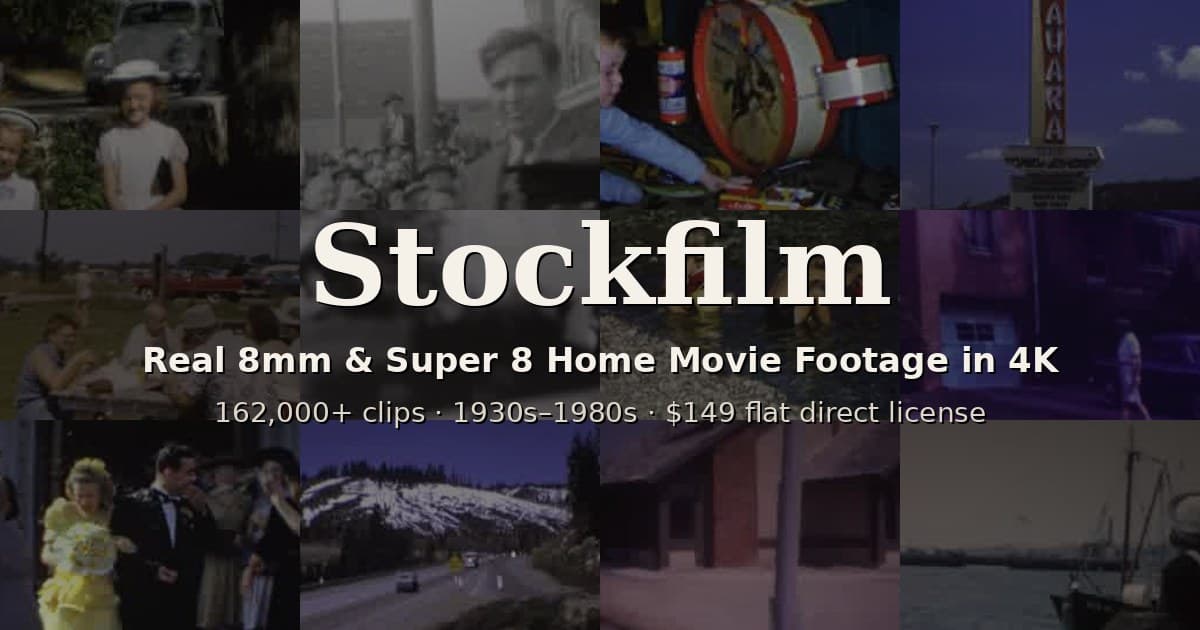
The distinction matters for production planning. When Stockfilm supplies chemically-verified footage, the acquisition represents a transfer of physical property with clear title, not a rental of access permissions subject to quarterly service agreements. This shifts the risk profile entirely:
- Permanence: Polyester film bases resist vinegar syndrome and physical degradation when stored properly, with lifespans measured in centuries rather than upgrade cycles.
- Autonomy: Projection requires only light and magnification; post-production requires only a scanner. No cloud synchronization, no authentication servers, no platform dependencies.
- Portability: A film reel is hardware-agnostic. It can be scanned at 2K today, 8K tomorrow, or converted to whatever format emerges next decade without negotiating with a platform holder.
For productions documenting volatile contemporary events—such as the recently released archival materials from Mykolaiv's occupation or the 1979 Newcastle riots—this autonomy carries ethical weight. Historical documentation should not depend on the financial health of a San Francisco tech firm or the stability of a cloud infrastructure contract.
Authentication in the Synthetic Media Era
The vulnerability of digital archives compounds when viewed alongside the current crisis in media authenticity. The proliferation of AI-generated deepfakes—from fabricated statements by public figures to synthetic reconstructions of historical events—has created a market environment where provenance carries premium value. When AFP Fact Check and similar organizations must laboriously debunk misrepresented archival footage (as recently occurred with Pakistani presidential materials), the production industry faces a secondary risk: audience skepticism toward any footage that cannot demonstrate material origin.
Chemically-verified 8mm footage offers a form of "material authentication" that synthetic media cannot replicate. The grain structure, color dye layers, and physical wear patterns create forensic signatures that establish temporal authenticity. For documentary teams navigating the current boom in historical storytelling—from Great Depression economics to 1990s countercultural movements—these chemical markers serve as due diligence against both accidental misattribution and malicious fabrication.
Building Vendor-Neutral Production Workflows
The practical response to the PBS incident is not to abandon digital workflows, but to diversify storage strategies through chemical redundancy. Forward-thinking production companies are treating 8mm and Super 8 masters as "offline insurance"—permanent reference files held independently of cloud infrastructure.
This approach proves particularly valuable for:
- Corporate heritage departments documenting industrial processes or executive leadership transitions where records must survive vendor transitions and legal disputes.
- Documentary teams working on multi-year projects where cloud storage costs compound and platform availability fluctuates.
- Agencies creating brand heritage campaigns requiring assets that remain accessible across decade-long licensing agreements regardless of tech industry consolidation.
The preservation standards applied to historical 8mm materials ensure that these assets remain production-ready without the restoration costs associated with degraded magnetic tape or obsolete digital files. When properly stored, the original emission dyes in mid-century film stocks retain color information that exceeds the bit-depth of many contemporary digital captures.
Frequently Asked Questions
How does chemical film protect against vendor disputes? Unlike cloud storage or proprietary digital formats, chemically-processed film constitutes physical property that cannot be encrypted, deleted, or locked by a third-party vendor. Once you hold the reel, your access depends only on physical possession and standard optical equipment—not on continuing service agreements, API compatibility, or platform solvency.
What makes 8mm/Super 8 chemically stable compared to other analog formats? Professional-grade 8mm and Super 8 stocks manufactured from the 1960s onward utilized polyester bases and stable dye couplers that resist the vinegar syndrome affecting earlier acetate films. When stored in climate-controlled environments, these materials demonstrate archival stability comparable to contemporary fine-art photographic papers, with expected lifespans exceeding 100 years without significant image degradation.
How do I integrate archival film into a modern post-production workflow? Contemporary film scanning technology allows 8mm and Super 8 footage to be digitized at resolutions up to 4K or 8K, creating high-quality digital intermediates while preserving the original chemical master as a permanent backup. This "scan once, distribute forever" model means the film serves as a future-proof source file that can be re-scanned as display technologies evolve, without the generational loss associated with digital format migration. For technical specifications, consult our detailed FAQ.
---
As production budgets tighten and archival research extends into increasingly contested historical territory, the material substrate of your footage matters more than ever. The cloud offers convenience; chemical film offers continuity. In an industry still processing the implications of fifty terabytes of lost history, that distinction is becoming impossible to ignore.