
When Bam Margera recently confirmed that the forthcoming Jackass film would incorporate "gnarly" archival footage from the franchise's early days, he inadvertently highlighted a broader shift in how contemporary producers value visual material. In an era where synthetic media can generate pixel-perfect simulations of reality within seconds, the unpolished, chemically-processed imperfections of vintage 8mm home movies have become surprisingly precious commodities. This isn't merely nostalgia operating at scale; it represents a fundamental recalibration of what constitutes visual evidence in documentary and reality programming.
The proliferation of AI-generated video—evidenced by recent fact-checking scrambles over fabricated political footage and synthetic war reporting—has created a counter-market for the irreducibly physical. Where algorithms produce seamless, gravity-defying perfection, authentic 8mm footage offers what might be called material friction: the grain structure of celluloid, the slight flicker of frame lines, the unpredictable bloom of light leaks. These chemical signatures function as temporal anchors, immediately signaling to audiences that what they're witnessing emerged from a specific moment in physical space, not from a generative model's statistical prediction.
The Aesthetics of Imperfection
Contemporary reality programming and action documentaries have increasingly abandoned the glossy aesthetic of traditional stock footage in favor of what archivists sometimes call "domestic cinema"—the rough, handheld aesthetic of home movies shot on Super 8 and Standard 8mm. This shift reflects changing audience sophistication. Viewers who have grown accustomed to identifying synthetic media through uncanny smoothness now read visual imperfection as a marker of authenticity.
The value lies precisely in what AI cannot easily replicate: the physics of analog capture. Eight-millimeter film responds to light through photochemical reaction, not digital sensors or algorithmic rendering. The resulting images carry temperature variations, registration wobbles, and organic grain patterns that embed themselves in the emulsion. For producers constructing narratives about human risk, physical extremity, or historical transformation—genres where the Jackass franchise merely represents the most visible example—these material qualities provide sensory cues that digital perfection cannot manufacture.
From Private Basements to Broadcast Infrastructure
The journey of personal 8mm collections into professional licensing frameworks represents one of the more significant developments in contemporary archival strategy. Unlike institutional archives with formal accession records, home movie collections arrive with provenance gaps that require careful reconstruction. Yet these materials increasingly form the backbone of character-driven documentaries, offering glimpses of pre-fame existence, family origins, or subcultural formation that establish narrative stakes.
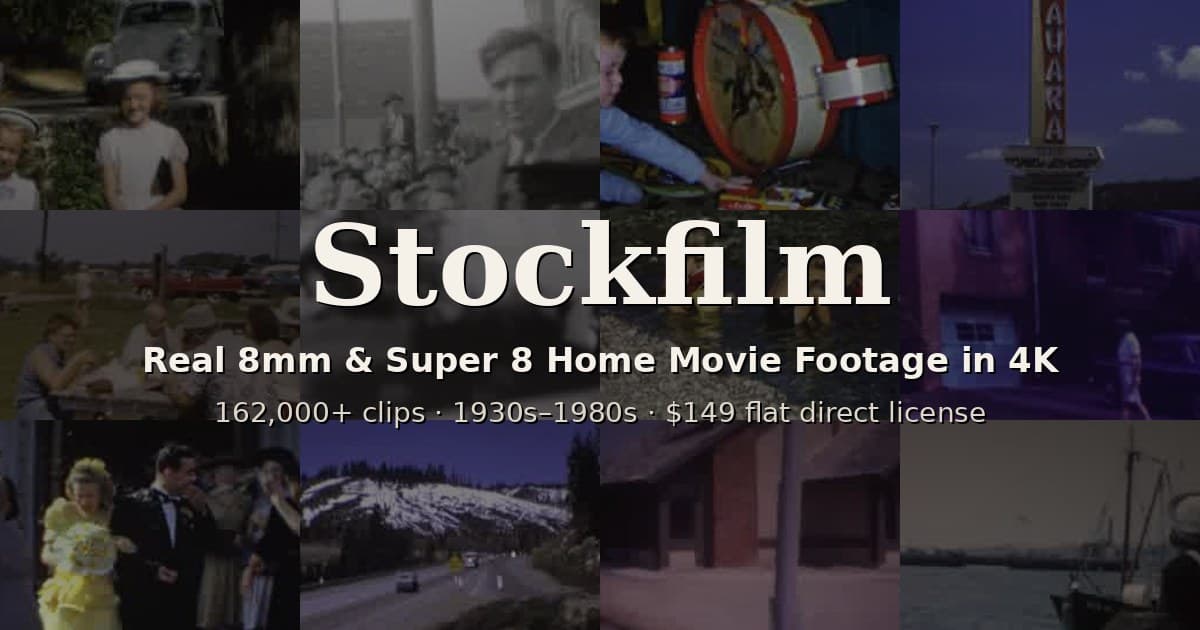
For editorial teams, sourcing this material requires understanding the chemical lifecycle of film. Properly stored acetate or polyester base film can remain stable for decades, but the scanning and preservation process determines whether that material friction translates to digital deliverables. Stockfilm's preservation methodology emphasizes frame-by-frame inspection and 4K oversampling to ensure that the organic textures—the "gnarly" qualities Margera referenced—survive digitization without being smoothed away by aggressive noise reduction.
The legal and ethical dimensions of licensing personal archives also differ significantly from institutional partnerships. While recent global video licensing initiatives by major newsrooms represent the formalization of institutional assets, personal home movies require clearing personality rights, music synchronization, and location releases that may span decades. However, the resulting footage often carries an emotional specificity that staged reenactments or AI-generated b-roll cannot approximate.
Production Applications for Raw Archives
Editorial teams working in contemporary non-fiction have developed specific workflows for integrating unpolished 8mm material. The footage serves distinct narrative functions across several genres:
- Action and Sports Documentaries: Providing visceral evidence of pre-digital stunt work, training regimens, or subcultural origins without the hyper-stabilized aesthetic of modern action cameras
- Reality Television: Establishing "before" states in transformation narratives or offering vérité textures that contrast with produced interview segments
- True Crime and Investigative Series: Creating atmospheric period context without the polished distance of network news archives
- Character Studies and Biopics: Supplying the visual grammar of memory—imperfect, fragmented, emotionally charged—for documentary series exploring personal history
- Brand Heritage Content: Grounding corporate origin stories in material reality rather than slick animation, particularly for outdoor, automotive, and lifestyle brands tracing their roots to pre-digital craftsmanship
The common thread across these applications is the need for footage that resists the uncanny valley of synthetic generation. When audiences encounter the soft focus and color drift of aged celluloid, they recognize a record of physical presence that algorithms struggle to simulate convincingly.
Verification in the Age of Synthetic Media
The technical characteristics of 8mm footage also serve emerging verification needs. As news organizations navigate the challenges of AI-generated misinformation—evidenced by recent fact-checking interventions regarding fabricated political imagery—chemically-produced archival material offers inherent authentication markers. The grain structure of film follows physical laws of light and chemistry that leave distinct patterns, whereas AI-generated "film look" filters often produce mathematically regular noise patterns that forensic analysis can identify.
For producers working in sensitive geopolitical or historical contexts, this verification layer has become essential. Understanding how analog preservation works helps editorial teams distinguish between authentic period footage and synthetic approximations. The chemical processing of 8mm film creates latent image characteristics—edge markings, dye layers, base scratches—that function as embedded metadata, confirming the temporal origin of the material in ways that digital files cannot replicate without complex blockchain verification.
Frequently Asked Questions
How do producers clear rights for personal home movies found in archival collections?
Licensing personal archives requires securing releases from identifiable individuals (or their estates), clearing any copyrighted music or logos visible in the frame, and confirming chain of title from the original photographer to the licensor. Reputable archival houses handle much of this clearance work before offering footage for license, though producers should always verify coverage for their specific distribution channels.
Can AI filters convincingly replicate the look of authentic 8mm film?
While AI tools can approximate film grain and color timing, they typically struggle to replicate the physical optics of 8mm cameras—specifically depth of field characteristics, gate weave, and the way celluloid responds to overexposure. Trained archivists and increasingly sophisticated audiences can often detect synthetic "film looks" through subtle uniformity in the noise patterns or impossible optical behaviors.
Why do documentary editors prefer chemically-processed footage over digital recreations?
Beyond aesthetic preferences, chemically-processed footage carries evidentiary weight that serves legal and ethical standards in documentary production. When depicting historical events or personal narratives, using material that physically existed during the period in question provides documentation that synthetic recreations cannot, protecting productions against challenges to their factual basis.
Conclusion
As synthetic media continues to challenge our collective capacity to distinguish recorded reality from generated simulation, the rough, imperfect textures of vintage 8mm footage have transcended mere stylistic preference. They have become functional necessities for producers requiring material evidence of temporal existence. Whether providing the visual backbone for action documentaries or grounding reality programming in physical truth, these "gnarly" archives offer something that algorithms cannot synthesize: the irreducible fact of having been there, captured in silver halide and light.