
The Return of the Original Formula
When Hershey announced plans to restore classic recipes following input from the Reese’s founder’s grandson, the company tapped into something larger than confectionery nostalgia. Across industries, from the historic Old Fort restoration in Indiana to the meticulous revival of 1920s vintage scales and classic American automobiles, a material restoration culture is taking hold. Organizations are returning to original specifications, pre-digital formulations, and analog production methods—not as aesthetic affectations, but as commitments to authentic provenance.
This physical restoration imperative is creating unexpected ripple effects in content production. Documentary teams, heritage brand producers, and archival researchers are discovering that telling these restoration stories requires more than modern B-roll of sanding and welding. To establish genuine temporal continuity, producers need footage that carries the chemical signature of the era being restored. In an age where an AI-generated singer like "Eddie Dalton" can chart on iTunes without existing, the distinction between manufactured content and documented reality has become a production liability.
When Restoration Meets Generation: The Authenticity Divide
The tension between restoration and generation defines current media production. Recent reporting on AI-generated war footage distorting Middle East narratives illustrates the risks of synthetic media masquerading as documentation. Conversely, Ron Howard’s Jim Henson Idea Man and Taylor Swift’s Elizabeth Taylor tribute demonstrate how archival methodology can extend and honor legacies without fabrication.
Restoration, in its truest sense, requires an original to exist. You cannot "restore" a 1967 Mustang using generative AI; you need the metal, the engineering, and the cultural context of 1967. Similarly, you cannot restore the visual texture of mid-century domestic life without footage that actually passed through a 1960s camera gate and underwent chemical processing. The "original formula" concept applies equally to chocolate recipes and to the silver halide crystals that captured light at specific moments in history.
8mm as Chemical Provenance
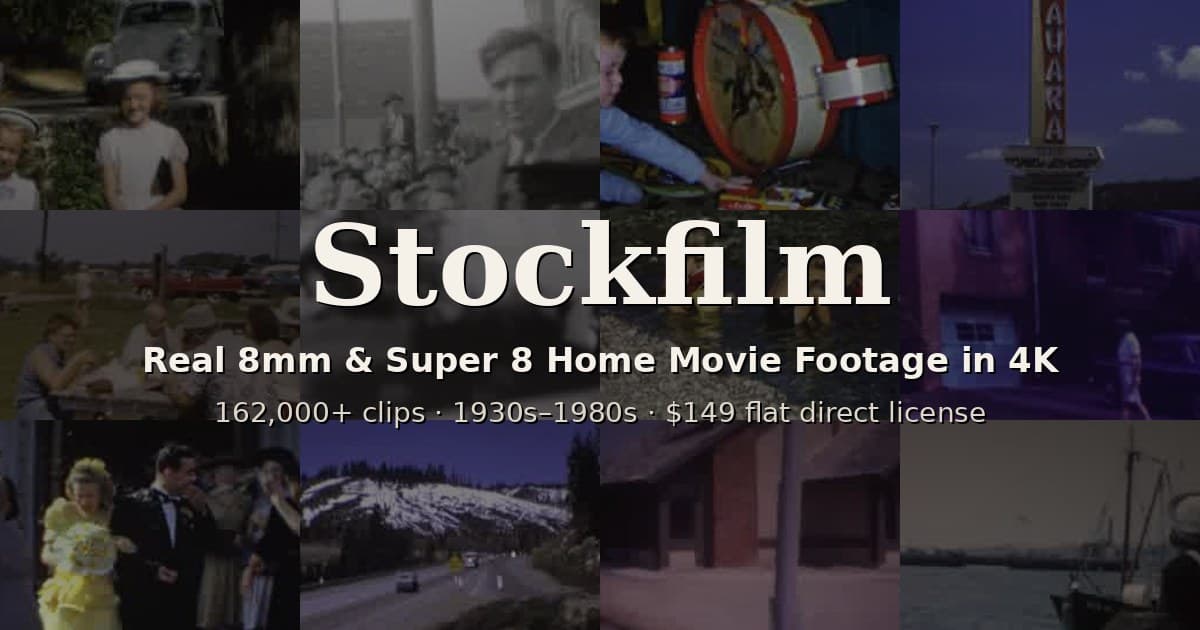
Super 8 and 8mm film occupy a unique position in this restoration economy. Unlike digital files that can be endlessly altered without detection, chemically-processed film carries material evidence of its creation. The grain structure, color shift characteristics, and optical registration of vintage 8mm provide what restoration experts might call "temporal provenance"—an unforgeable link to specific light captured at specific moments.
For producers documenting restoration projects, this materiality matters. When filming a vintage stove restoration or the rebuilding of a historic fort, intercutting modern 4K footage with period 8mm creates a dialogue between the original state and the restored present. The archival footage functions not merely as illustration, but as baseline documentation—proof of what materials, colors, and spatial relationships originally existed. This approach respects the same principles driving the physical restoration movement: that authenticity resides in material continuity, not approximation.
Production Applications in the Restoration Economy
The practical applications for chemically-verified 8mm extend across several growing content verticals:
- Heritage Manufacturing Documentaries: As companies like Hershey return to original recipes, they require period footage showing mid-century production lines, packaging, and consumer use. Authentic 8mm provides the visual language of industrial heritage without the uncanny perfection of AI-generated "historical" footage.
- Architectural Restoration Projects: When restoring historic buildings or classic automobiles, contractors and documentary teams use archival footage to establish "before" states that may predate current deterioration. The accidental documentation found in home movie archives often reveals structural details, color schemes, and environmental contexts missing from official records.
- Culural Heritage Programming: The restoration of public spaces, from historic forts to mid-century modern landmarks, benefits from amateur 8mm footage that captures these spaces in active use. Unlike professional archival material that often focuses on ceremonies, home movies reveal daily life textures essential for authentic restoration storytelling.
- Biographical Legacy Projects: Following the model of recent archival-heavy releases, producers are licensing 8mm to ground celebrity or family legacies in verifiable history rather than synthetic resurrection. This approach satisfies both ethical concerns and emerging platform requirements for content authentication.
Sourcing Standards for Material Authenticity
For buyers entering this space, understanding preservation standards becomes essential. Not all vintage footage offers the same evidentiary value. Over-restored digital transfers that scrub grain and adjust color timing can inadvertently strip away the material signatures that establish authenticity. When sourcing for restoration-era projects, look for collections that maintain the optical characteristics of the original film—slight gate weave, chemical color casts, and organic grain structures that signal genuine analog capture.
Preservation workflows that prioritize gentle handling of the film stock and minimal digital intervention preserve these material qualities. Buyers should inquire about chain-of-custody documentation and scanning methodologies that respect the physical artifact while enabling modern editorial workflows.
FAQ
How does 8mm footage provide provenance that digital cannot?
8mm film captures photons through a physical lens onto a chemical emulsion, creating a material artifact that cannot be retroactively generated without detection. The specific grain patterns, light halation, and color response of vintage film stocks create a forensic signature tied to specific manufacturing processes and time periods. Unlike digital files, which offer no material barrier to manipulation, chemically-processed film requires physical alteration that leaves traces, providing documentary teams with a baseline of trust increasingly required by distributors and platforms.
Can archival footage be used in commercial restoration campaigns?
Yes, period footage is increasingly licensed for heritage marketing, provided rights clearance is properly managed. For restoration-focused campaigns—whether celebrating the return of a classic recipe or the rebuilding of a historic site—8mm footage offers "baseline documentation" that establishes authentic continuity with the past. This is particularly valuable for brands navigating consumer skepticism toward AI-generated content, as the chemical verification of film provides tangible proof of historical connection.
What should producers look for when sourcing footage for restoration documentaries?
Prioritize collections that emphasize minimal digital restoration of the source material. While dust removal and stabilization are standard, aggressive grain reduction or color "correction" can strip away the material qualities that establish temporal authenticity. Look for footage with documented provenance, clear rights chains, and scanning protocols that capture the full dynamic range of the original negative or reversal film. The goal is footage that feels chemically of its era, not digitally polished to meet modern aesthetic standards.
Conclusion
The heritage restoration movement—from kitchen recipes to classic automobiles—reflects a cultural pivot toward material authenticity. For content producers, this means recognizing that authentic restoration storytelling requires sources that share the same physical integrity as the objects being restored. In an environment where synthetic media generates endless content without substance, chemically-verified 8mm footage offers something increasingly rare: the original formula, captured in light and silver, waiting to be rediscovered.