
When the Jackson family gathered in Berlin for the premiere of Michael Jackson's latest biopic, they represented the industrial pinnacle of archival storytelling: meticulous reconstruction, authorized narratives, and the smooth polish of legacy preservation. Days later, across the Atlantic, a different archival conversation emerged with Barbara Forever, a documentary capturing the unconventional, deeply personal cinematic world of experimental filmmaker Barbara Hammer. These two poles—mainstream mythmaking and avant-garde intimacy—reveal a widening gap in how we visualize biography in 2026.
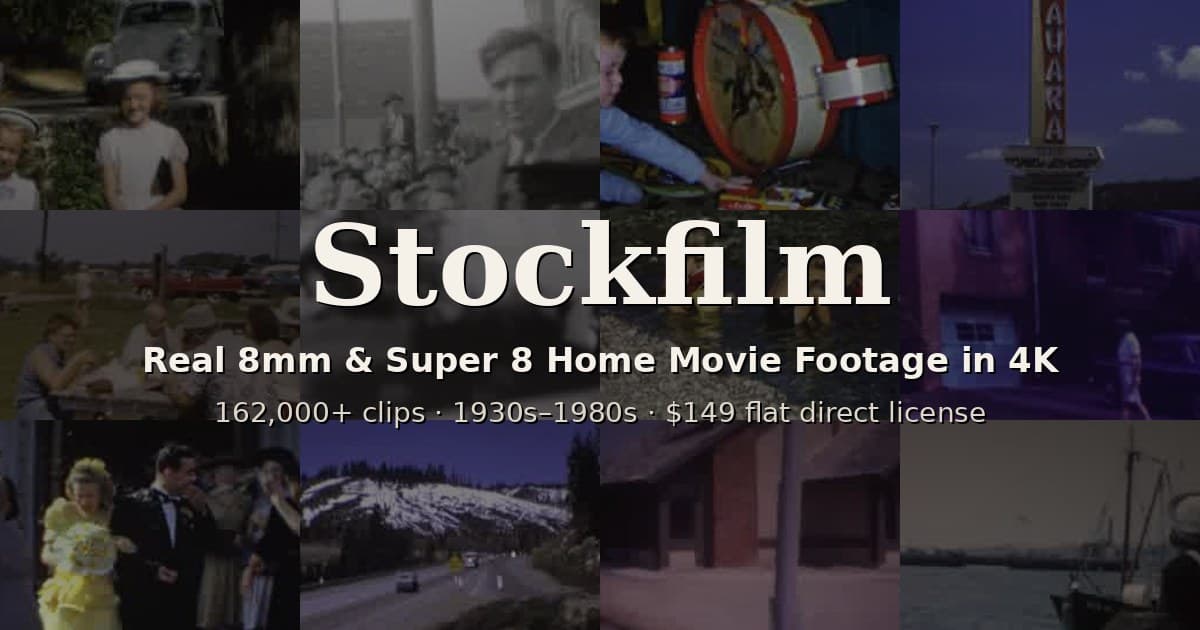
Between these extremes, a distinct production trend is crystallizing. Filmmakers are increasingly rejecting both AI-generated synthetic performances and the glossy archival reconstructions of traditional biopics. Instead, they are gravitating toward chemically-authentic 8mm and Super 8 footage—material that carries what Walter Benjamin might have recognized as an evolving "aura" of temporal specificity. In an era where The Guardian reports on AI-generated Lego videos and "slopaganda" wars, the irregular grain, chemical decay, and optical imperfections of small-gauge film have become premium assets rather than technical limitations.
The Experimental Turn in Biographical Filmmaking
The Barbara Hammer documentary signals more than nostalgia for avant-garde cinema; it represents a methodological shift in how producers approach life stories. Hammer's work insisted on the body, the domestic, and the explicitly personal as legitimate documentary subjects. Contemporary filmmakers are extending this ethos, using vernacular 8mm footage—home movies, outtakes, and non-professional documentation—to construct biographical narratives that deconstruct rather than reinforce celebrity mythology.
This approach diverges sharply from the industrial biopic machinery. Where traditional productions commission synthetic recreations or license polished newsreel packages, experimental documentarians seek the accidental frame, the overexposed birthday party, the blurred vacation footage. These images carry what archivists call "indexical truth": a physical relationship between light, chemistry, and moment that cannot be algorithmically generated because AI models lack the physical substrate of silver halide crystals responding to specific photons at specific historical moments.
Materiality as Narrative Strategy
In experimental biography, the medium itself becomes part of the argument. When a filmmaker cuts from pristine 4K interview footage to jittery, color-shifted 8mm vacation reels, the visual rupture signals temporal displacement more effectively than any CGI transition. The chemical instability of vintage film—fading magenta dyes, vinegar syndrome edges, gate hairs—provides what digital effects cannot: authentic material decay that testifies to the passage of real time.
This materiality offers particular value for projects examining the late twentieth century's "analog interregnum"—the period between the decline of mainstream 8mm usage and the rise of digital video. Footage from this era (roughly 1975-1995) exists in a sweet spot of cultural specificity and chemical vulnerability. As explored in our archive methodology, understanding the preservation states of these materials helps producers assess not just image quality, but evidentiary weight.
Verification Through Chemistry
The concurrent crisis of AI-generated misinformation—exemplified by recent concerns over synthetic media in geopolitical propaganda—has created unprecedented demand for verification protocols in documentary production. While deepfake detection software races to catch algorithmic forgeries, chemically-processed 8mm footage offers a different kind of security: optical physics that generative models cannot statistically replicate.
AI video generation operates through pattern prediction, creating plausible pixel arrangements based on training data. It cannot reproduce the specific optical characteristics of Super 8 chemistry: the way certain emulsions handled tungsten light in 1978, the particular gate weave of a Bolex camera, or the accidental double-exposures that occurred when amateur filmmakers forgot to advance the cartridge. These "errors" function as material signatures, providing preservation frameworks that authenticate temporal origins through physical properties rather than metadata.
For experimental documentarians, this verification capability merges with aesthetic intent. The same chemical characteristics that prove authenticity also create the haptic, textured visual language that distinguishes intimate biography from industrial production. In a media landscape saturated with synthetic perfection, the organic irregularities of small-gauge film read as honest witness.
Production Workflows for Intimate Archives
Integrating vernacular 8mm into contemporary documentary requires specific technical and legal approaches distinct from traditional stock footage licensing:
- Chemical Timing vs. Digital Correction: Preserving the original color science of faded film stocks often yields more authentic results than aggressive digital restoration, particularly for projects emphasizing material honesty over visual polish
- Vernacular Sourcing: Amateur footage requires different chain-of-custody verification than institutional archives, focusing on provenance documentation rather than broadcast standards
- Format Integration: The contrast between 8mm grain structure and modern digital sensors creates dynamic visual tension that editors can leverage for temporal signaling
- Rights Complexity: Personal archives often carry complex privacy considerations distinct from public figure newsreel licensing, requiring careful clearance protocols for background individuals and private settings
These workflows align with the growing restoration culture visible in parallel trends—from Havana's architectural preservation to vintage toy repair—suggesting a broader cultural hunger for material history over synthetic replacement. For production teams navigating these requirements, documentary case studies demonstrate how chemically-verified archival material integrates into award-winning non-fiction storytelling.
When Imperfection Carries Premium Value
The documentary market's expansion into streaming platforms has created stratified aesthetic demands. While mainstream biopics compete for spectacle, experimental and premium documentary sectors increasingly value what we might call "authenticating imperfection." The same decay patterns that would disqualify footage from a commercial spot become essential credibility markers for intimate biography.
This value proposition intensifies when considering AI-generated content saturation. As platforms implement labeling requirements for synthetic media and audiences develop skepticism toward digital perfection, the "unrestored" aesthetic of genuine 8mm footage functions as both creative choice and liability protection. For producers working with high-profile subjects or contentious historical narratives, chemically-verified archival material provides defensible provenance that AI-generated recreations cannot match.
Frequently Asked Questions
How does 8mm footage provide authentication that digital archives cannot?
Chemically-processed 8mm film carries physical characteristics—grain structure, dye stability profiles, and optical artifacts—that result from specific emulsion chemistry interacting with historical light conditions. These material signatures create a "chemical fingerprint" that verifies temporal origin through physical properties. Unlike digital files, which can be manipulated without trace, analog film's decay patterns and optical physics provide material evidence of capture date and processing history that resists synthetic generation.
What makes experimental documentary licensing different from traditional archival?
Experimental projects often prioritize vernacular or amateur footage over professional newsreels, requiring different clearance protocols. While institutional archives typically offer pre-cleared broadcast packages, personal 8mm collections may involve complex privacy considerations for background individuals, private property, and family estates. Production teams must balance creative access with ethical documentation, particularly when working with intimate domestic scenes rather than public performances.
Can degraded or damaged 8mm footage be used professionally?
Yes, and increasingly, such footage carries premium value for specific documentary applications. Chemical decay—color shifting, vinegar syndrome, scratches—can function as narrative elements signifying temporal authenticity. However, physical deterioration must be distinguished from format obsolescence; while faded colors might enhance a period aesthetic, severe base degradation requiring specialized scanning should be evaluated against production budgets and technical requirements.
Conclusion
The convergence of avant-garde documentary revival and AI-generated media skepticism has created a unique market position for authentic 8mm archival footage. As filmmakers move beyond both industrial mythmaking and synthetic recreation, the intimate, chemically-verifiable qualities of small-gauge film offer something increasingly rare: visual evidence that carries its own temporal witness.
In this landscape, the grain matters. The light leaks matter. The accidental blur of an amateur hand holding a Canon 514XL in 1982 matters—not as technical deficiencies, but as irreplaceable documentation of material reality. For producers navigating the space between Barbara Hammer's experimental intimacy and the Jackson biopic's monumental scale, authentic archival footage provides the chemical foundation for stories that resist both algorithmic generation and historical erasure.